Google has recently unveiled its latest smartphone iteration, the Pixel 11, featuring the advanced Tensor G6 processor, a refined camera array, and a host of artificial intelligence-powered software enhancements. Despite these promising new features, an in-depth analysis suggests that for a significant portion of existing Pixel 10 users, upgrading to the new model may not represent a worthwhile investment. This conclusion is based on several factors, including the substantial financial outlay required for the upgrade, the incremental nature of the performance improvements, and the enduring capabilities of the Pixel 10.
Detailed Report: Weighing the Pixel 11 Upgrade
On August 22, 2026, tech enthusiasts were introduced to the Google Pixel 11 series, a device that, while impressive on paper, closely mirrors its predecessor, the Pixel 10. For those considering an upgrade, especially from a Pixel 10, a thorough examination of the costs and benefits is crucial.
One of the primary deterrents for upgrading is the financial cost. With the resale value of a Pixel 10 hovering around $400, transitioning to a Pixel 11 would necessitate an additional investment of approximately $500. This represents a considerable expense for what is essentially a year's use of the Pixel 10, with marginal gains in return. While concerns about the Pixel 10's resale value depreciating further are valid, historical data suggests a relatively slow decline in value for Pixel devices, making immediate upgrades less economically sound.
From a performance standpoint, the Pixel 11's Tensor G6 processor, while an improvement over the Pixel 10's Tensor G5, is described as a modest update. The Tensor G6, with its seven-core CPU (1x Arm C1-Ultra at 4.1GHz, 4x C1-Pro at 3.3GHz, 2x C1-Pro at 2.6GHz) and PowerVR C-series GPU, promises enhanced battery efficiency and a 50% boost in TPU computing power. However, the overall performance difference in daily usage between the two models is not expected to be dramatically noticeable, especially given the cost of the upgrade.
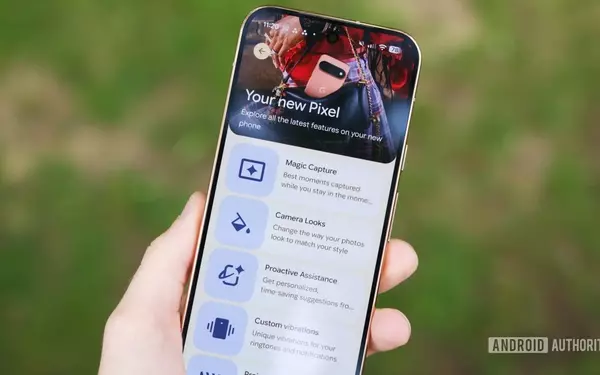
Camera advancements in the Pixel 11 are also incremental. While the new model retains a triple-lens setup, it introduces a 1/1.56-inch sensor for the main camera, offering about 56% better light sensitivity. More significantly, Google has introduced software features like 'Camera Looks' for customizable photo profiles and 'Magic Capture' for generating HDR+ photos from video. However, Google's camera prowess traditionally lies in software optimization, and it's highly probable that many of these software-driven innovations will eventually become available to older Pixel models, including the Pixel 10, through updates.
The Pixel 11 also arrives with Android 17 and new AI features, such as 'Creator Suite' which includes a teleprompter, storyboard function, and improved stabilization, alongside 'Gemini Intelligence' for more agentic AI capabilities. While these additions are certainly beneficial, they are not deemed "game-changers" that warrant a significant financial investment, especially since many of Google's flagship software features tend to propagate to earlier Pixel generations over time.
Crucially, the Pixel 10 maintains significant usability and longevity. Google provides seven years of operating system updates and bug fixes, and with the Pixel 10 only a year into its lifecycle, it still has many years of support ahead. The functional disparities between the Pixel 10 and Pixel 11 are not substantial enough to revolutionize the Android user experience, suggesting that an upgrade primarily for minor conveniences might lead to buyer's remorse.
Therefore, a strategic approach would be to defer the upgrade. Waiting three to six months would allow Pixel 10 owners to maximize their phone's usage period and potentially benefit from early sales on the Pixel 11, which often coincide with the release of competing flagship devices like the Samsung Galaxy S27 series. While Pixel phones do depreciate, the rate of decline is relatively slow, meaning the difference in resale value between successive models, such as the Pixel 9 and Pixel 10, is often minimal.
Ultimately, for individuals still using a Pixel model several years old, the Pixel 11 would indeed represent a substantial upgrade. However, for those already owning a Pixel 10, or considering purchasing one at a reduced price, the Pixel 11 offers too little in the way of transformative improvements to justify the immediate financial and practical cost of an upgrade.
This detailed report highlights a crucial trend in the smartphone market: the diminishing returns of annual upgrades for many users. The Pixel 11, while a capable device, underscores the increasing maturity of smartphone technology. For consumers, this means a more considered approach to upgrades is becoming necessary, prioritizing actual needs and significant technological leaps over incremental improvements. The longevity of modern smartphones, coupled with manufacturers' extended software support, empowers users to make more financially prudent decisions, opting to retain their devices longer or to upgrade only when truly groundbreaking innovations are introduced. This also nudges consumers towards appreciating the value of a device that continues to perform admirably for years, rather than succumbing to the pressure of having the absolute latest model.