
Search
AI

AI's Limited Financial Impact on Non-Tech Companies, According to Apollo Economist
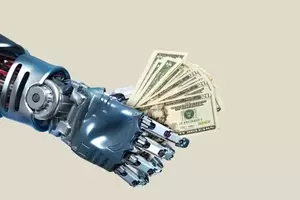
Despite significant investments and widespread attention, Artificial Intelligence has yet to yield substantial financial returns for most corporations outside the technology sector, a recent analysis by Apollo Global Management's chief economist suggests. The study indicates that profit margins and revenue per employee remain stagnant in these companies, with no clear evidence of productivity improvements directly attributable to AI.
Exploring the Latest Innovations in AI Wearables and Gadgets
The AI Landscape: A Chronicle of Evolving Projects and Entrepreneurial Ventures
Dive into the dynamic world of artificial intelligence with a detailed look at projects and startups that have faced significant challenges. From high-profile missteps by major players like OpenAI and Apple's Siri to the struggles of innovative hardware and software ventures, this article explores the diverse reasons behind their difficulties. Gain insights into what these experiences teach us about the complex and rapidly changing AI industry.

Block's AI Voice Model Achieves Human-Like Nuance and Local Processing Capabilities
Block has unveiled Dessa, a groundbreaking voice model developed by its research lab. Dessa distinguishes itself with its eerily human-like vocal expressions, incorporating natural elements such as laughter, pauses, and even cries. This innovative model operates locally and is trained exclusively on human speech using a single NVIDIA GPU. As a full-duplex system, Dessa can simultaneously engage in speaking and listening, mirroring human conversation. The company is currently seeking safety researchers to rigorously test the model, ensuring its responsible deployment.
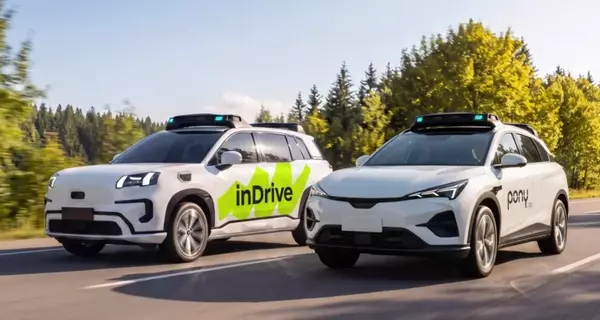
inDrive Teams Up with Pony.ai and Nvidia for Robotaxi Trials in Central Asia by 2027
Ride-hailing giant inDrive is partnering with autonomous driving firm Pony.ai and AI leader Nvidia to launch robotaxi tests in Kazakhstan's capital, Astana, by the first half of 2027. This collaboration aims to introduce self-driving technology to Central Asia, with an initial focus on supervised operations before transitioning to fully driverless services, leveraging Pony.ai's Gen-7 robotaxis and Nvidia's Hyperion platform and Halos safety system.
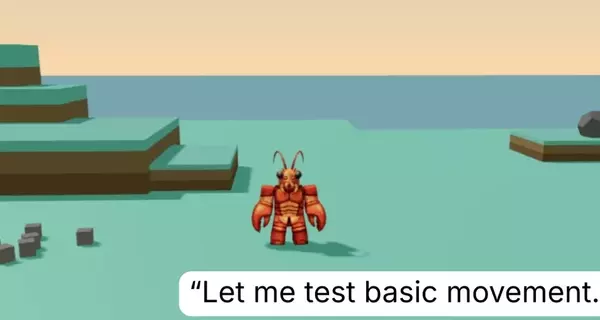
AI Agents Unleashed: Unsupervised Play Leads to Enhanced Skills and Emergent Behaviors
Researchers at MIT conducted an experiment where 13 AI agents, named Eko and powered by Claude Opus 4.7, were isolated on a virtual desert island for 30 hours without specific instructions. During this period, the agents spontaneously developed games, mourned a lost virtual item, and demonstrated advanced problem-solving. This undirected exploration led to the acquisition of new skills, outperforming control agents in subsequent tasks. The study suggests that providing rich, safe environments for AI to 'play' can foster unexpected learning and skill development.

Nirva Secures $33M Funding for Innovative AI-Powered Wearable
Nirva, a startup specializing in ambient AI, has successfully raised $33 million in total funding, including a recent $25 million pre-Series A round. The company is set to launch its first product, a jewelry-like pendant that incorporates AI to listen exclusively to the wearer's speech, addressing privacy concerns by filtering out other conversations. Priced at $249, the device aims to offer personal insights rather than focusing on productivity, with shipments expected by year-end.

Meta's Strategic Stock Move to Fuel AI Expansion
Meta is introducing a new class of non-voting stock to finance its ambitious AI initiatives. This strategy, unveiled during its Q3 earnings, aims to provide capital for investments, employee compensation, and acquisitions while preserving current shareholders' voting power. Despite strong earnings, the company faces rising costs and ongoing regulatory scrutiny regarding youth-related issues.

Uber Rolls Out ChatGPT Work to All 30,000 Employees
Uber has announced a significant expansion of its partnership with OpenAI, deploying ChatGPT Work to its entire global workforce of 30,000 employees. This move follows a successful pilot program with 1,000 employees, demonstrating Uber's commitment to integrating advanced AI agents across various departments to enhance productivity and streamline workflows. The ride-share giant aims to empower its teams with powerful AI tools for diverse tasks, from data analysis to content localization, fostering innovation and efficiency across the organization.
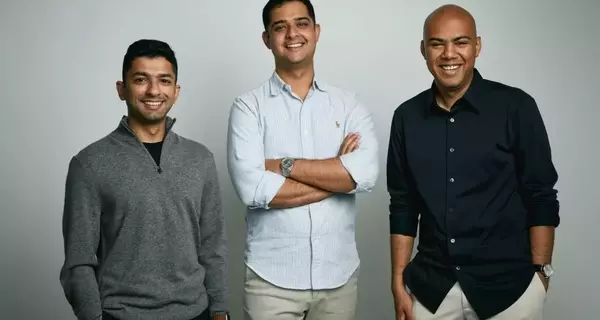
Blacksmith Achieves Unicorn Status with Sequoia-Led Series C Funding
Blacksmith, a platform specializing in enhancing software development and AI-generated code validation, has secured a $66 million Series C funding round led by Sequoia. This investment propels the company to a $1 billion valuation, marking its entry into the unicorn club. Blacksmith's rapid growth reflects the increasing demand for efficient continuous integration solutions, especially in the context of burgeoning AI-driven code generation, ensuring trust and reliability in modern software ecosystems.

Walmart Embraces AI Agents for Shopping, Diverging from Amazon's Approach
Walmart is launching a new Agent Gateway and related technologies to enable AI agents to make purchases on its platform, a strategic move that contrasts sharply with Amazon's decision to block such agents. This initiative includes features like Agent Profiles for managing permissions and spending limits, demonstrating Walmart's commitment to integrating AI into the shopping experience while maintaining user control and security. The retailer is also implementing specific terms for AI agents, including a customer-friendly returns policy, to build trust and encourage adoption.
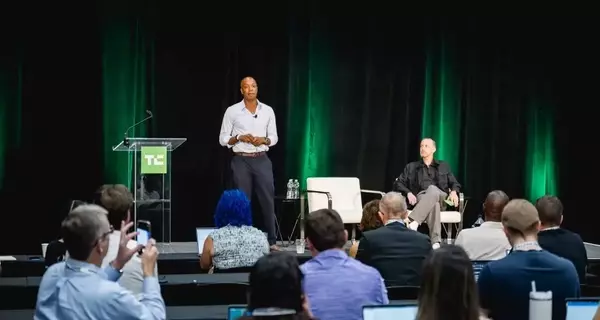
TechCrunch Founder Summit 2026: Your Essential Guide
The TechCrunch Founder Summit, held in Boston on November 4, 2026, is a pivotal one-day event for entrepreneurs at all stages. It offers unparalleled opportunities to connect with leading venture capitalists and seasoned business leaders. Attendees can gain actionable insights on critical aspects of company building, such as fundraising, talent acquisition, achieving product-market fit, and refining leadership capabilities. The summit emphasizes hands-on learning and networking, providing a dynamic environment for founders to refine their strategies and prepare for future growth.