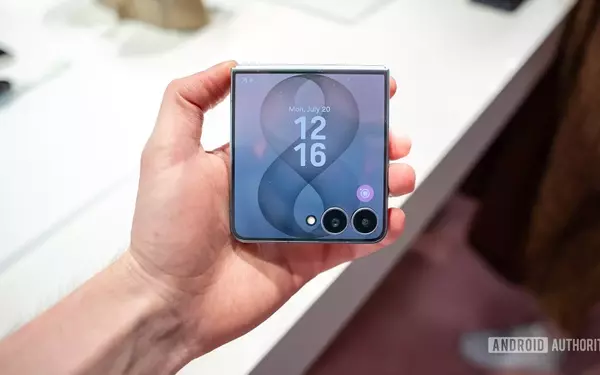
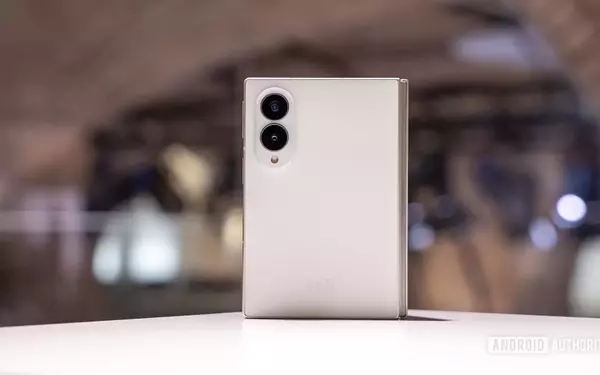
Samsung has recently introduced its latest lineup of foldable smartphones, including the Galaxy Z Fold 8, Galaxy Z Fold 8 Ultra, and Galaxy Z Flip 8. These devices showcase elegant designs, powerful chipsets, and innovative silicon-carbon batteries. Despite these advancements, a recurring issue casts a shadow over their appeal: Samsung's persistent use of an IP48 durability rating, which falls short in providing adequate protection against dust. This decision is increasingly problematic as competitors offer more robust solutions, raising concerns about the long-term resilience of these premium devices.
The IP48 rating, initially featured in the Galaxy Z Fold 6 and Flip 6 in 2024, indicates protection against objects 1mm or larger. Crucially, it does not guarantee resistance against finer particles like dust. This means that despite their high price tags, these new foldable phones remain vulnerable to common environmental factors such as lint from pockets, beach sand, or even household dust. While Samsung's previous hinge designs could expel some debris, a lack of certified dust protection leaves consumers uneasy. This stands in stark contrast to even budget-friendly smartphones, which often offer better dust resistance, highlighting a significant gap in Samsung's approach to foldable phone durability.
Compared to other major manufacturers, Samsung's approach to durability in its foldable devices is notably conservative. Competitors such as HONOR and vivo have introduced models like the Magic V5 and X Fold 5 with IP58 ratings, offering better protection against dust ingress. Google's Pixel 10 Pro Fold further raised the bar with an impressive IP68 rating, signifying complete dust sealing. While early IP68-rated foldables were often thicker, newer models like HONOR's Magic V6 demonstrate that comprehensive dust and water resistance can be achieved without sacrificing a slim design. This shows that Samsung's adherence to the IP48 standard puts it behind the curve in the evolving foldable market.
In 2026, it appears that Samsung and Motorola are exceptions rather than the rule, as most other brands have moved towards offering more robust IP ratings for their foldable phones. Devices from OPPO, vivo, and HUAWEI all come with at least an IP58 rating, many of which also boast competitive designs, enhanced battery life, and superior camera systems. For consumers in the US seeking a foldable phone with certified dust resistance, Google's Pixel Fold remains one of the few viable options. This market trend underscores a growing user expectation for durable devices that can withstand daily wear and tear without requiring excessive caution.
Ultimately, while Samsung's new Galaxy foldables are likely to perform well in everyday scenarios, the absence of certified dust protection at their premium price point is a major concern. Consumers are increasingly weary of handling their foldable devices with extreme care, and many competitors have already responded to this demand by integrating advanced durability features. For Samsung to remain competitive in the rapidly evolving foldable market, it must address this hardware vulnerability and align with industry standards for enhanced dust resistance.