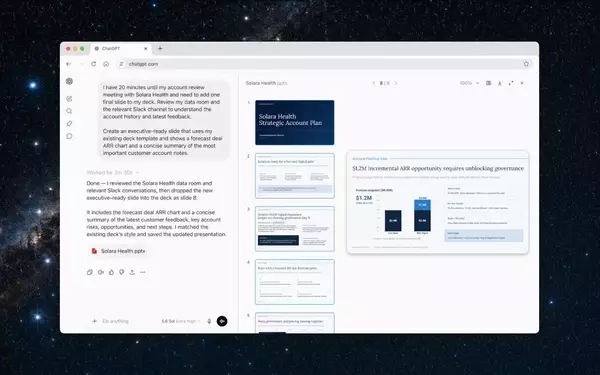
OpenAI has officially clarified the nature of its ongoing collaboration with Microsoft, designating its latest large language model, GPT-5.6, as the primary AI engine for Microsoft Copilot 365. This announcement directly addresses recent speculation about a potential divergence in their partnership, which arose from reports indicating Microsoft's increased reliance on its in-house MAI models for cost efficiency within applications like Word and Excel.
Despite earlier narratives hinting at Microsoft's strategic shift towards internal AI solutions to reduce operational expenses, OpenAI's statement firmly positions GPT-5.6 at the core of Microsoft's productivity suite. This move reinforces the deep integration between the two technology giants, emphasizing a continued commitment to leveraging advanced AI to enhance user experience across a range of workplace tools.
OpenAI Solidifies Partnership with Microsoft
OpenAI has reaffirmed its commitment to its strategic alliance with Microsoft by officially naming GPT-5.6 as the "preferred model" for Microsoft's Copilot 365. This decision counters recent discussions about a potential split, which were fueled by reports of Microsoft incorporating its own MAI models to cut costs across various applications. OpenAI's statement, made during the launch of GPT-5.6, underscores the enduring nature of their collaboration and aims to quell any rumors of a weakening bond between the two AI powerhouses. The designation ensures that Microsoft users will continue to benefit from OpenAI's cutting-edge AI capabilities within their everyday productivity tools.
The declaration from OpenAI highlights that its newly unveiled GPT-5.6 model will be the driving force behind Microsoft's suite of productivity applications, including Microsoft Word, Excel, PowerPoint, and Cowork. This move signals a robust continuation of their joint efforts to integrate sophisticated artificial intelligence into widely used software. While there had been prior discussions suggesting Microsoft might pivot towards its proprietary AI technologies for economic reasons, OpenAI's public assertion confirms that the partnership remains strong, with their latest model playing a central role in delivering advanced AI functionalities to a vast user base. The emphasis on GPT-5.6 as the "preferred model" underscores a sustained and strategic collaboration in the evolving AI landscape.
Strategic Implications of GPT-5.6 Integration
The formal announcement of GPT-5.6 as the preferred model for Microsoft Copilot 365 carries significant strategic implications for both OpenAI and Microsoft. By explicitly stating this preference, OpenAI is actively working to dispel any notions of a strained relationship, particularly in the wake of reports that Microsoft was exploring its own MAI models to reduce operational expenditures. This public reaffirmation strengthens the perception of a unified front in the competitive AI market, ensuring that OpenAI's technological advancements remain central to Microsoft's AI-driven initiatives across its core business applications. The move could also set a precedent for how deep-tech partnerships navigate challenges and communicate their long-term vision to the market.
The integration of GPT-5.6 across Microsoft's ecosystem, encompassing applications like Word, Excel, PowerPoint, and Cowork, signifies a sustained commitment to leveraging external innovation for enhanced product offerings. This continued reliance on OpenAI's advanced models suggests that, despite internal R&D efforts, Microsoft values the unique capabilities and continuous evolution of OpenAI's technology. Although the exact meaning of "preferred model" might invite further scrutiny, the immediate impact is a clear signal to the market that the partnership is robust. This strategic alignment ensures a consistent and powerful AI experience for Microsoft's extensive user base, while also allowing OpenAI to maintain its prominent position as a leading provider of generative AI solutions in enterprise environments.