Hannover Re, a prominent global reinsurer, has unveiled its latest financial instrument, the sixth iteration of the Acorn Re parametric earthquake catastrophe bond, aiming to raise $200 million. This strategic move underscores the growing reliance on capital markets to mitigate natural disaster risks, offering a stable and predictable mechanism for risk transfer.
Hannover Re's Latest Catastrophe Bond: Securing Against Seismic Risks
In a significant development for the insurance-linked securities market, global reinsurance giant Hannover Re has launched its sixth parametric earthquake catastrophe bond, named Acorn Re Ltd. (Series 2025-1). The offering seeks to attract $200 million from catastrophe bond investors to provide crucial reinsurance protection against seismic events on the U.S. West Coast. This initiative, dated October 6th, 2025, marks another step in leveraging innovative financial solutions for natural disaster risk management.
The Acorn Re series is notable for its parametric structure, meaning payouts are triggered based on predefined geophysical parameters (like earthquake magnitude and location) rather than actual insured losses. This mechanism offers rapid and transparent claims settlement, a key advantage in post-disaster recovery. The current issuance, like its predecessors, primarily benefits Oak Tree Assurance Ltd., a Vermont-based workers' compensation captive insurer for the Kaiser Permanente group of health plan companies. Additionally, the bond extends protection to other entities reinsured by Hannover Re that possess exposure within the designated parametric earthquake zones.
The geographic scope of the coverage remains concentrated on the U.S. West Coast, with California earthquakes accounting for over 80% of the expected loss for these notes. The parametric box structure also encompasses surrounding states such as Oregon, Washington, Nevada, Utah, Idaho, Arizona, as well as parts of Canada (British Columbia) and Mexico (Baja California and Sonora states), along with certain offshore Pacific areas. The bond is designed to provide multi-year, per-occurrence protection for a three-year term, covering annual risk periods from November 1st, 2025, to the end of October 2028.
Acorn Re Ltd., a Bermuda-based special purpose insurer, will issue a single Class A tranche of notes. The proceeds from the sale of these $200 million notes will be used to collateralize retrocessional reinsurance agreements with Hannover Re, which in turn facilitates reinsurance agreements with Oak Tree Assurance and provides protection to its other reinsureds. The trigger design employs a sliding scale of payouts, with a minimum activation of 25% depending on the magnitude and location of an earthquake event.
The initial attachment probability for the Acorn Re 2025-1 Class A notes is set at 1.26%, with an initial expected loss of 0.96%. The pricing guidance for investors indicates a spread range of 2.5% to 2.9%. This pricing reflects a tighter market compared to the previous year's Acorn Re 2024-1 notes, which priced at a 3.1% spread with an initial expected loss of 0.88%. However, it aligns more closely with the 2021 issuance, which had an expected loss of 0.89% and priced at 2.5%, signaling a broader trend of tightening risk spreads in the catastrophe bond market back to 2022 or even earlier levels.
This latest Acorn Re transaction underscores the sustained demand for catastrophe bonds as a critical tool for risk transfer, demonstrating Hannover Re's ongoing commitment to providing robust and innovative solutions for its clients and the broader reinsurance market.
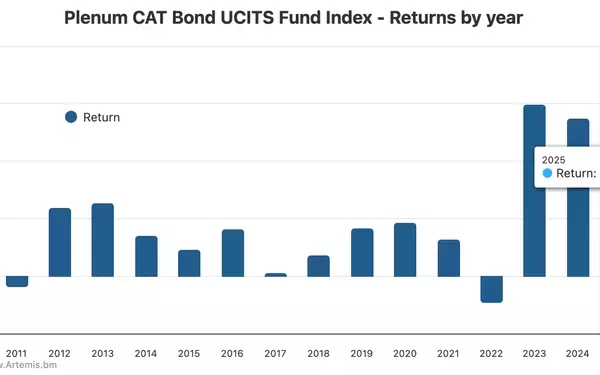
The continuous issuance of parametric catastrophe bonds, such as the Acorn Re series by Hannover Re, highlights a significant trend in the insurance and reinsurance sectors: the increasing sophistication and adoption of capital market solutions for managing complex risks. This approach offers enhanced transparency, speed in claims processing, and diversification for both insurers and investors. From a broader perspective, it demonstrates a robust evolution in how societies and industries prepare for and mitigate the financial impact of natural catastrophes, fostering greater resilience in vulnerable regions. The tightening of risk spreads also reflects growing investor confidence and a maturing market, suggesting a future where such instruments play an even more integral role in global risk management strategies.