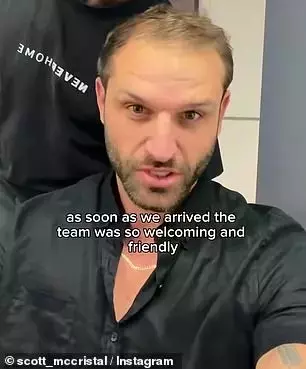
In a recent television appearance, dancer Giovanni Pernice engaged in a pointed exchange with interviewers, asserting that his newly released book serves as a memoir of his journey and not a platform to rehash past controversies. He aims to offer his factual account and acknowledge those who stood by him. Pernice clarified his departure from a prominent dance competition, stating his contract was not extended rather than being terminated, and expressed his readiness to move forward from the public discourse surrounding the events.
Giovanni Pernice's Heated Television Interview Regarding 'Strictly' Exit and New Book
On Tuesday, September 1, 2026, Italian dancer Giovanni Pernice appeared on the morning talk show, 'This Morning', where he faced a rigorous interview with hosts Craig Doyle and Christine Lampard. The discussion centered on his new book, 'Taking The Lead', which reportedly details his perspective on the 2023 controversy with actress Amanda Abbington that ultimately led to his departure from the dance competition, 'Strictly'.
During the live broadcast, Doyle pressed Pernice on why he chose to include the controversy in his memoir, suggesting it would inevitably reignite public discussion. Pernice, clearly frustrated, countered that his intention was to provide his factual viewpoint and express gratitude to his supporters. He emphasized that the book encompasses his life story and is not solely focused on the investigation, stating, "it's the story of my life it's not a book dedicated to the investigation."
Doyle continued to challenge Pernice, highlighting Abbington's 'side of the story' and the substantial compensation she received following the BBC investigation. Pernice maintained that he had adhered to the rules, waiting for the investigation to conclude before sharing his account. He reiterated that he was not 'sacked' from 'Strictly' but rather his contract was not renewed, a point he stressed he was comfortable discussing now that the investigation was over and his mental health had improved.
Lampard then read a statement from Abbington's spokesperson, accusing Pernice of attempting to reframe the BBC investigation's findings and underplaying the upheld complaints. The statement asserted that the BBC had apologized to Abbington and paid her significant compensation, implying the seriousness of the allegations. Pernice, however, remained firm, stating he was not there to "justify" himself and had "moved on a long time ago." He pointed to his victory in the Italian version of 'Strictly' in 2024 with his current girlfriend, Bianca Guaccero, as a form of "small revenges in life."
The interview's confrontational tone drew criticism from viewers, with many describing it as an "interrogation." Fans took to social media, particularly X (formerly Twitter), to defend Pernice, arguing that he had every right to present his side of the story and that the interviewers seemed biased.
Reflecting on Public Scrutiny and Personal Narratives
The intense televised exchange involving Giovanni Pernice underscores the complexities faced by public figures when their professional lives intersect with personal disputes and media scrutiny. It highlights the challenge of reclaiming one's narrative, especially when legal and professional investigations have unfolded publicly. Pernice's decision to publish a memoir, rather than engage in a series of interviews, reflects a strategic effort to consolidate his perspective and present it on his own terms. However, as the interview demonstrated, even a carefully constructed narrative can be met with persistent questioning, particularly when conflicting accounts and established outcomes, such as compensation settlements, are part of the public record.
This situation also brings to light the role of media in shaping public perception. While hosts often aim to provide balanced reporting and hold individuals accountable, the thin line between inquiry and perceived interrogation can significantly influence audience reception. The strong viewer reactions, labeling the interview an "interrogation," suggest a public awareness of how questioning can feel disproportionate or biased. Ultimately, the episode serves as a reminder of the enduring power of personal stories in the public consciousness and the ongoing struggle for individuals to control their own narratives amidst the relentless gaze of the media.