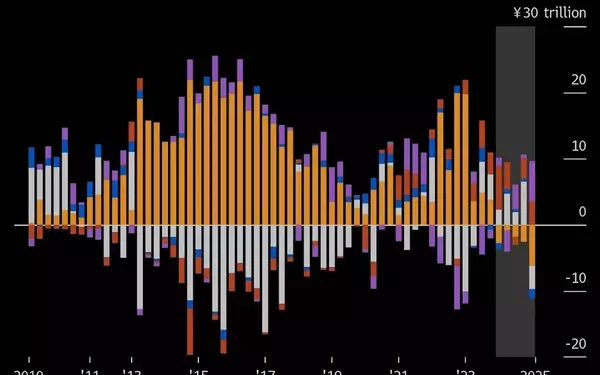
In light of recent surges in yields on super-long Japanese government bonds, some market participants have urged the Bank of Japan (BOJ) to reconsider its tapering strategy. The central bank revealed these requests during a survey of bond market players, highlighting the complexities involved in gradually phasing out its extensive monetary stimulus measures. While most respondents see no immediate need to alter the current tapering plan, there is division regarding future steps beyond fiscal year 2026.
Amidst political pressures for increased fiscal spending ahead of an upcoming upper house election in July, demand for super-long bonds has weakened significantly. This situation poses challenges for the BOJ as it prepares to reassess its existing tapering program next month and devise a new strategy for the subsequent fiscal year. One participant suggested that the BOJ should respond flexibly by either halting tapering or adjusting the volume and types of bonds it purchases.
Despite differing opinions on the optimal pace of tapering after fiscal year 2026, many agree that reducing purchases too quickly could destabilize markets. Currently, under the tapering plan introduced last year, the BOJ aims to cut its monthly bond purchases to 3 trillion yen ($20.77 billion) by March 2026. This gradual reduction is intended to shrink its massive balance sheet by up to 8% without causing significant disruptions.
A few survey respondents advocated for even slower reductions, recommending quarterly cuts of approximately 200 billion yen instead of the planned 400 billion yen. Such cautious approaches reflect concerns about maintaining market stability amidst potential fluctuations in supply and demand dynamics.
The BOJ's deliberations come at a pivotal moment as global peers have already advanced further in unwinding crisis-era policies. Although Japan exited its prolonged era of aggressive monetary easing last year and ended negative interest rates, short-term borrowing costs remain fixed at 0.5%. As discussions continue with bond market participants over two days starting Tuesday, outcomes from this meeting will inform policy decisions during the BOJ's upcoming June 16-17 gathering.
As the BOJ moves forward cautiously in reshaping its quantitative tightening approach, balancing market stability with effective economic management remains paramount. The insights gained from stakeholder feedback emphasize the necessity of flexible responses tailored to evolving financial conditions while ensuring long-term sustainability.