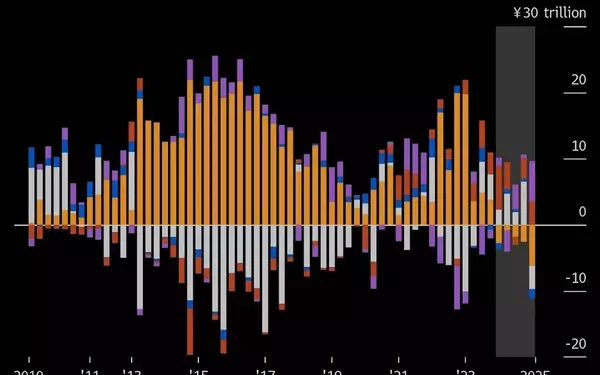
Amidst a shifting monetary policy landscape, Japan's bond market has experienced significant fluctuations. The yields on long-term Japanese government bonds reached unprecedented heights recently, driven by concerns over demand following a disappointing 20-year debt auction. This situation presents a challenge for the Bank of Japan as it navigates away from prolonged ultra-easy monetary policies. Analysts suggest that without intervention, further instability could arise in the super-long bond sector, potentially leading to broader economic repercussions.
The dynamics within Japan's bond market are increasingly complex due to external factors such as rising U.S. Treasury yields and internal fiscal pressures. Over the past weeks, yields on super-long Japanese government bonds have surged dramatically, coinciding with heightened U.S. Treasury yields and credit rating downgrades. Political discussions around potential tax cuts ahead of an upcoming election add another layer of uncertainty. Prime Minister Shigeru Ishiba has expressed grave concerns about Japan’s fiscal health, comparing it unfavorably to Greece during its peak debt crisis era, thus resisting calls for immediate tax reductions.
In response to these challenges, the Bank of Japan under Governor Kazuo Ueda is gradually adjusting its approach by reducing monthly bond purchases. Despite this measured withdrawal of stimulus measures initiated by his predecessor Haruhiko Kuroda, some market participants advocate for increased buying of super-long bonds or reconsideration of tapering strategies. Market experts emphasize the need for flexible responses to restore stability in the super-long sector, highlighting liquidity issues that could trigger a sell-off spiral affecting multiple segments of the bond market. Moving forward, finding equilibrium amidst policy changes remains crucial not only for Japan but also globally, reflecting a delicate balance between economic growth and financial stability.
As Japan continues to navigate through these turbulent times, the importance of strategic decision-making becomes evident. Balancing fiscal responsibility with economic progress underscores the necessity of thoughtful policies that foster sustainable development. By addressing current challenges effectively, Japan can set a precedent for managing economic transitions while maintaining investor confidence and ensuring long-term prosperity.