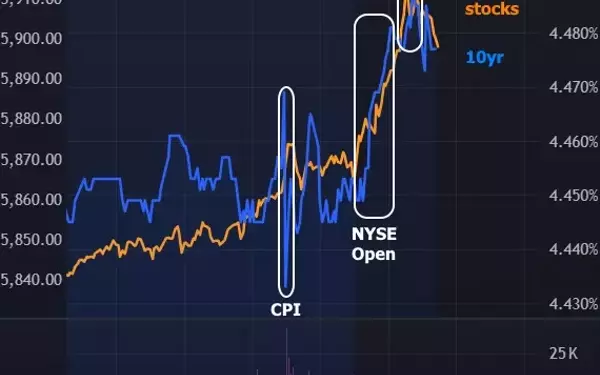
In a recent development, the US Treasury bonds witnessed a decline as the upswing in American stocks bolstered the expanding belief among Wall Street players that the Federal Reserve is unlikely to implement interest-rate cuts until December. This shift was influenced by several factors including the US-China trade truce and President Trump's positive remarks during a US-Saudi investment forum. These developments have led to an increased movement of capital from safer assets like Treasury bonds into riskier ventures such as stocks.
The dynamics within the US government bond market were significantly affected by the April inflation data, which indicated smaller-than-expected increases in consumer prices. Initially, this data had spurred gains in the bond market, particularly influencing the two-year note’s yield. However, the momentum soon shifted as investors began focusing more on potential fiscal stimuli emerging from Capitol Hill and its implications on future inflation rates.
Investor sentiment was further shaped by comments from key figures in financial institutions. For instance, David Kelly, chief global strategist at JPMorgan Asset Management, highlighted the dual impact of tariffs and fiscal stimulus on short-term and long-term inflation trends. Meanwhile, traders in the interest-rate options market demonstrated a preference for bets that benefit from rising yields on long-maturity bonds. Additionally, the Bloomberg Dollar Spot Index experienced a notable decline, reflecting broader shifts in currency valuation amidst these economic considerations.
A significant factor contributing to the selloff was investor anxiety regarding the US fiscal outlook, exacerbated by a draft tax bill introduced by the Republican majority in the House of Representatives. Estimated to cause a $3.7 trillion revenue loss over a decade, this proposal has sparked concerns about its long-term economic ramifications. Moreover, the issuance of new investment-grade corporate bonds indicates a renewed appetite for risk among investors following a period of caution due to earlier trade tensions.
Despite the April consumer price index data offering some clarity, the overall inflation outlook remains uncertain. Analysts suggest that companies might still be navigating through extensive inventory stockpiles before resorting to price hikes, even as tariffs are expected to eventually boost inflation levels. This uncertainty continues to influence bond market sentiments, with fixed-income experts expressing cautious optimism about core goods prices stability in forthcoming data cycles.
Looking ahead, while the temporary reprieve in trade tensions has boosted market sentiment, lingering uncertainties persist. The potential for remaining tariffs to impact either pricing or profit margins could alter growth and profitability expectations in the US economy. As major banks revise their projections for Fed rate cuts, the evolving landscape suggests a complex interplay between fiscal policies, trade dynamics, and monetary decisions that will continue to shape market trajectories.