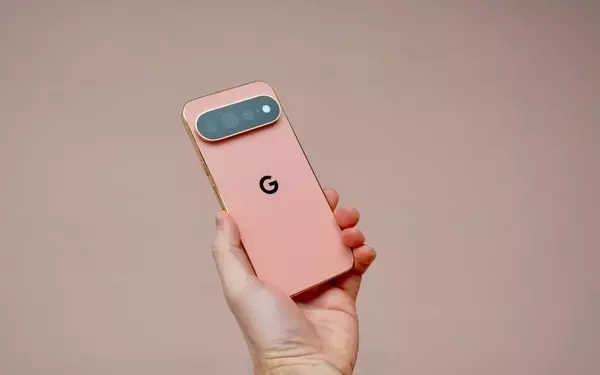
Google's latest Pixel 11, while an attractive proposition, especially as the most accessible model under $1,000, comes with potential drawbacks that might lead consumers to explore other Android options. This overview presents five noteworthy alternatives, each offering distinct advantages in performance, camera capabilities, form factor, or price, prompting potential buyers to carefully consider their preferences before committing to the Pixel 11.
Google's recently launched Pixel 11 series positions the base Pixel 11 as the most budget-friendly option, with a starting price of $899. This marks a slight increase from its predecessor but establishes it as the sole mainline Pixel device under the $1,000 threshold. While appealing to those looking to avoid the higher costs of the Pixel 11 Pro, Pixel 11 Pro XL, or the Pixel 11 Pro Fold, it's prudent to examine alternatives that might offer a more compelling package.
The Samsung Galaxy S26 emerges as a strong contender, particularly for users concerned about the performance of Google's Tensor G6 chip. Sharing a similar 6.3-inch display and a triple-camera setup with the Pixel 11, the Galaxy S26 is expected to outperform its Google counterpart thanks to its Qualcomm Snapdragon 8 Elite Gen 5 for Galaxy processor. Google's somewhat vague details regarding the Tensor G6's performance improvements, contrasted with the Snapdragon's proven capabilities, make the S26 an attractive choice for speed-conscious users. Beyond raw power, Samsung's One UI 8.5 offers enhanced multitasking and customization options, alongside a blend of Galaxy AI and Google AI features, with a privacy toggle for cloud-based functions. Although the Galaxy S26 features a smaller battery and a less robust camera system compared to the Pixel 11, its overall performance profile likely makes it the superior device.
For those willing to invest slightly more for significant upgrades, the Google Pixel 11 Pro presents itself as a formidable internal alternative. Priced $200 higher than the base model, it maintains the same 6.3-inch screen size but boasts a sharper 1,280x2,856 resolution and an impressive 3,600-nit peak brightness, ensuring superior visual clarity even in bright conditions. The Pixel 11 Pro also shines in its camera department, featuring a 50MP primary, 48MP ultrawide, and 48MP telephoto lens with 5x optical zoom, far surpassing the base Pixel 11's secondary camera specifications. Additionally, its 42MP front-facing camera offers a substantial upgrade for selfie enthusiasts. The inclusion of HiLight, a colorful notification LED on the camera bar, adds a unique touch. While the Pixel 11 is lighter and has a larger battery, the Pro model's enhanced display and camera system offer a better value for users prioritizing these features.
Value-conscious buyers might find the Google Pixel 10a to be a highly attractive option. Despite the Pixel 11's advancements, the Pixel 10a's $499 price tag, nearly $400 less than the Pixel 11, raises questions about the necessity of the former's higher cost. While lacking internal magnets for Qi2 charging, the Pixel 10a's other features are commendable for its price point. It shares the Pixel 11's 6.3-inch, 120Hz display and 3,000 nits of peak brightness, though with thicker bezels and a 9mm profile. Its larger 5,100mAh battery and a capable 48MP primary and 13MP ultrawide camera setup add to its appeal. Running on the older Tensor G4 chip with 8GB RAM and 128GB UFS 3.1 storage, it may not set performance records, but it reliably handles daily tasks, making it an excellent budget Android phone, especially given frequent sales.
The Samsung Galaxy Z Flip 8 caters to users desiring a truly compact device, contrasting with the increasingly large form factors of standard flagships. This foldable phone measures a mere 85.7mm when closed, yet unfolds to reveal a spacious 6.9-inch screen. Powered by the Snapdragon 8 Elite Gen 5 for Galaxy chipset, it promises performance that will likely outshine the Pixel 11's Tensor G6. Priced at $1,199, it is more expensive than the Pixel 11, but for those prioritizing a compact, foldable design without compromising on flagship-level performance, the Z Flip 8 offers a unique and compelling alternative.
Finally, the Motorola Edge (2026) offers a premium experience at a more accessible price point than the Pixel 11, costing $600. Its sleek design, with a 7.2mm thickness and a weight of just 160.5 grams, gives it a more modern and stylish feel compared to the heavier Pixel 11. The Motorola Edge (2026) also boasts superior camera hardware, including a 50MP main camera, a 10MP telephoto, and a 50MP ultrawide lens, plus a 50MP front-facing camera, outperforming the Pixel 11 in ultrawide and selfie photography. While its MediaTek Dimensity 7450 processor might not surpass the Tensor G6, the Edge 2026 compensates with an equally sized 6.3-inch, 120Hz display that is significantly brighter at 5,200 nits. A larger 5,000mAh battery and 68W wired fast charging further enhance its value. Despite potential uncertainties regarding software updates, the Motorola Edge (2026) provides a compelling blend of features and aesthetics at a price that leaves an additional $300 in the buyer's pocket.
In conclusion, while the Google Pixel 11 offers a solid entry into Google's latest lineup, a diverse array of Android smartphones provide compelling alternatives. From the raw power and refined software of the Samsung Galaxy S26, to the superior camera and display of the Pixel 11 Pro, the budget-friendly yet capable Google Pixel 10a, the innovative and compact design of the Samsung Galaxy Z Flip 8, and the sleek, feature-rich Motorola Edge (2026), consumers have ample choices. Each option caters to different priorities, whether it's performance, camera quality, portability, or cost-effectiveness, ensuring that there's a perfect fit for nearly every user looking beyond the base Pixel 11.