Serval, a burgeoning enterprise AI firm, recently concluded a significant Series A funding round, securing an impressive $47 million. This investment was spearheaded by Redpoint Ventures, with additional contributions from notable venture capital entities including First Round, General Catalyst, and Box Group. Beyond its robust financial backing, Serval boasts a distinguished roster of clientele, counting major AI industry players like Perplexity, Mercor, and Together AI among its partners. The company's core innovation lies in leveraging agentic AI models to automate various facets of IT service management, employing a nuanced strategy that harnesses AI's capabilities while circumventing common challenges.
Serval's distinctive methodology in IT service management involves the deployment of two specialized AI agents. One agent is dedicated to developing internal automations for recurring tasks, such as software authorization or device provisioning. This functions as an intuitive coding assistant, operating under the supervision of an IT manager to perform the bulk of the automation work. The second agent, a help desk assistant, processes user inquiries by invoking these predefined tools based on established protocols. This separation of duties ensures a high degree of control and precision within the automated processes.
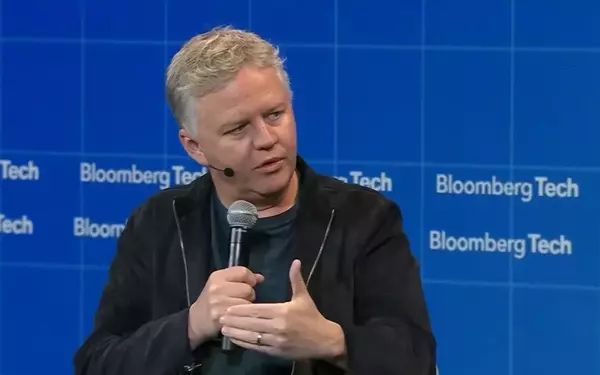
A critical aspect of Serval's design philosophy, as highlighted by CEO Jake Stauch, is simplifying the creation of automation tools. Stauch emphasizes the goal of eliminating the perceived cost associated with building these automations, making it more efficient to establish a permanent automated solution than to execute a task manually even once. This focus on ease of deployment is central to the platform's utility for enterprise clients.
By segmenting the responsibilities between a tool-building agent and a tool-utilizing agent, Serval provides managers with enhanced oversight of permissions. When an automation is developed, the manager defines specific conditions under which it can be activated, thereby creating an essential safeguard against unauthorized actions by the help desk agent. This architectural choice addresses the critical concern of enterprise clients regarding the potential hazards of an unsupervised AI system.
The company deliberately opted against a monolithic, all-encompassing Help Desk Agent to mitigate the risks associated with an overly autonomous AI. Stauch illustrates this point by explaining that a user requesting to delete all company data would not be accommodated by Serval's help desk agent; instead, the agent would inform the user of its inability to perform such a function while offering available alternatives, such as password resets. This selective capability ensures that AI actions remain within predefined and safe boundaries.
Furthermore, the inherent deterministic nature of the tools developed by Serval allows for the integration of intricate permission structures. These can include complex requirements such as multi-factor authentication for certain actions or time-bound usage restrictions. Should these rules need modification, an AI agent is readily available to implement changes directly within the codebase, offering flexibility and responsiveness to evolving security needs.
This innovative approach represents a significant advancement in managing agentic AI systems, tackling the prevalent challenge of supervising their operations. Stauch reiterates that Serval's platform is designed to provide complete transparency and control over AI agent activities. This is achieved by empowering users to construct their own tools and meticulously tailor the permissions and approval mechanisms that govern them, fostering a secure and efficient IT service environment.