Unlocking the Universe's Data: Satlyt's Vision for In-Orbit AI
The Genesis of Satlyt: From Earth-Bound Visions to Orbital Ambitions
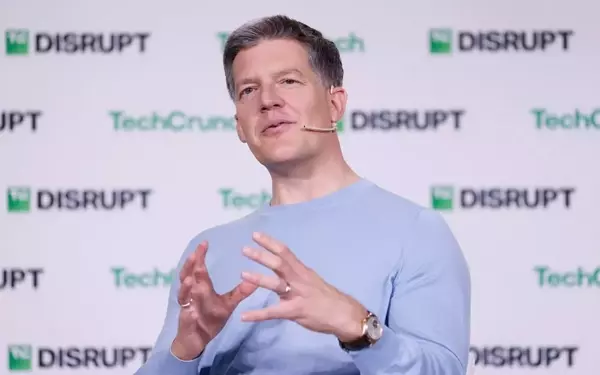
Rama Afullo, a visionary engineer with a distinguished background at Google's cloud computing division and SpaceX's Starlink, recognized the immense, untapped potential of in-space computing. Despite internal rejections from his former employers regarding his pioneering ideas for orbital data centers, Afullo remained convinced of the concept's viability. This unwavering belief led him to depart from SpaceX and co-establish Satlyt, a company strategically headquartered in both Sunnyvale, California, and Nairobi, Kenya.
Securing Future Skies: Satlyt's Significant Seed Funding Achievement
Satlyt recently announced a substantial seed funding round, successfully raising $8 million. This capital infusion is earmarked to fuel the development of its groundbreaking software designed to enable sophisticated AI models to operate directly aboard satellites. The timing of this investment is particularly fortuitous, aligning with a growing industry trend towards orbital data centers, a concept now embraced even by former skeptics like SpaceX.
A Distinctive Approach: Open Software for Diverse Satellite Ecosystems
Unlike companies that integrate hardware and software into proprietary systems, Satlyt champions an open-source philosophy, positioning itself as the 'Android' equivalent for orbital computing. The company's core mission is to create a versatile software platform capable of functioning across a multitude of satellite types and manufacturers. This approach contrasts sharply with the 'iPhone-style' closed ecosystems favored by entities such as SpaceX, Google's Project Suncatcher, and other emerging space startups like Starcloud and Cowboy Space Company.
Real-World Demonstrations: Enhancing Spacecraft Efficiency through AI
Satlyt's innovative software has already proven its efficacy through two successful demonstration missions. These initial deployments focused on optimizing spacecraft operations, particularly by reducing the reliance on ground-based flight controllers for anomaly resolution and data processing. By leveraging AI to make decisions directly on the spacecraft, the need for costly and time-consuming data downlink is significantly reduced, leading to considerable operational savings. One notable achievement involved deploying Google DeepMind's Gemma AI model on a Momentus spacecraft, which resulted in a 60% reduction in data transmission size for onboard software error reports, potentially saving hundreds of thousands of dollars annually per satellite.
Expanding Horizons: Future Missions and Collaborative Ventures
A forthcoming mission will see Satlyt's software integrated into a spacecraft developed by TakeMe2Space, an Indian startup specializing in satellite computing hardware. This mission is multifaceted, serving three key clients: NASA, which is funding tests for space cloud computing protocols; Stellerian, a company dedicated to space surveillance that seeks to evaluate image processing workloads; and TakeMe2Space itself, aiming to demonstrate the satellite's capability to host third-party software. Looking ahead, Satlyt plans to establish a shared computing system—a true orbital cloud—spanning two distinct satellites by next year, further solidifying its role as a third-party compute provider for spacecraft developers.
Strategic Investments and Market Outlook: The Future of Orbital Computing
Non Sibi Ventures, a Houston-based firm, led Satlyt's seed round. Bernard Harris, a partner at Non Sibi and a former NASA astronaut, underscored the firm's confidence in Satlyt's unique space-based business model. Kent Lucas, another partner, highlighted that Satlyt's success isn't solely contingent on the widespread adoption of high-powered space data centers but is also driven by the increasing number of satellites launched annually. Afullo envisions Satlyt's software being active on 20% of all satellites by the decade's end, anticipating that advanced processors like GPUs will become standard components in future spacecraft. He firmly believes that any satellite launched without such computing power will be at a competitive disadvantage, emphasizing the transformative potential of in-orbit A