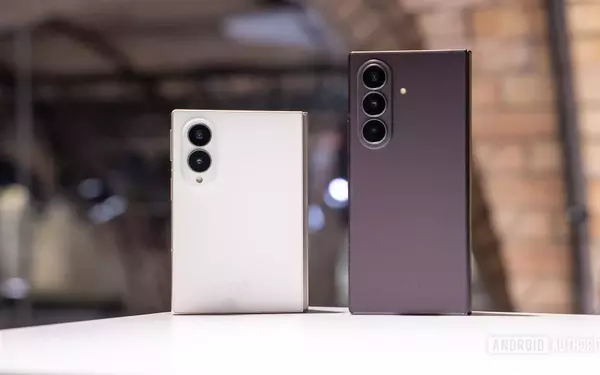
Samsung has launched its latest foldable smartphones, the Galaxy Z Fold 8 and Flip 8, setting a new precedent as the inaugural devices to incorporate Google's Gemini Intelligence and Gemini Nano 4. This significant development was confirmed by Google in a recent developer blog post, highlighting the advanced on-device AI capabilities now available to users.
The integration of Gemini Nano 4, a sophisticated on-device model leveraging Gemma 4, brings robust multilingual support for over 140 languages and offers superior multimodal understanding compared to its predecessors. The Galaxy Z Fold 8 and its Ultra variant are equipped with the high-performance Snapdragon 8 Elite Gen 5 processor and either 12GB or 16GB of RAM. Meanwhile, the Flip 8 utilizes Samsung's proprietary Exynos 2600 chipset, paired with 12GB of RAM. Both configurations meet Google's stringent 12GB memory requirement for Gemini Intelligence, ensuring seamless AI performance. A standout feature introduced with this launch is an expanded task automation capability, now functional across more than 40 applications. This represents the initial phase of Gemini Intelligence deployment, with additional features like 'Create My Widget' and 'Gboard Rambler' anticipated in future updates.
The early release of these AI features on Samsung’s foldables is particularly noteworthy, as it places Samsung ahead of Google's own Pixel 11 series, which is expected to eventually receive the same "with Gemini Intelligence" certification upon its launch. Google has indicated that this badge signifies premium hardware integration rather than a specific pricing tier or geographical availability. While the full suite of Gemini Intelligence features is yet to be rolled out, with Google not providing a specific timeline, Samsung's devices are currently leading the market in offering these advanced AI functionalities, demonstrating a commitment to enhancing user experience through cutting-edge technology.
The proactive integration of advanced AI into mobile technology not only enhances device functionality but also paves the way for a more intuitive and personalized user experience. This strategic move by Samsung, in collaboration with Google, underscores the rapid evolution of smartphone capabilities and signifies a future where intelligent features are central to daily digital interactions, ultimately empowering users with more efficient and seamless control over their devices.