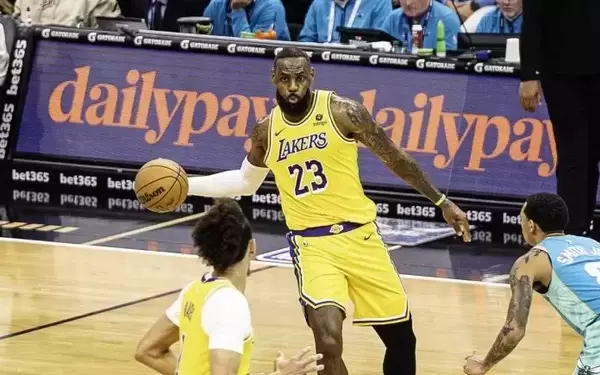
Rich Paul, agent for LeBron James, recently commented on the star's exit from the Los Angeles Lakers, emphasizing that the move was driven by James' desire to dictate the concluding phase of his illustrious career. Paul's remarks underscored a broader perspective on the dynamics between elite athletes and their respective franchises, suggesting that in professional sports, personal ambition often outweighs team loyalty.
During an interview with ESPN, Paul likened career decisions in the NBA to a game of blackjack, where players must make strategic choices based on their individual interests. He candidly stated, "There's no loyalty in business," implying that athletes, particularly those of James' caliber, must prioritize their own futures over long-term commitments to any single organization. This philosophy guided James' choice to depart from the Lakers after an eight-season tenure, a period during which he consistently delivered high-level performance.
At 41 years old during the 2025-26 season, James maintained an impressive average of 20.9 points, 7.2 assists, and 6.1 rebounds per game over 60 appearances, showcasing his enduring impact on the court. His time with the Lakers included a significant achievement: leading the team to an NBA championship in 2020. Furthermore, he cemented his legacy by becoming the league's all-time leading scorer. However, the Lakers had begun to transition, focusing on developing a new core around emerging talents like Luka Doncic and Austin Reaves. The team concluded the 2025-26 regular season with a 53-29 record, securing the Pacific Division title, but their playoff journey ended in a sweep by the Oklahoma City Thunder in the Western Conference semifinals.
The Lakers' strategic shift post-James involved solidifying their new foundation rather than extending the "LeBron era." Austin Reaves signed a substantial four-year, $185 million maximum contract after an impressive season averaging 23.0 points and 5.5 assists, reinforcing his role as a key player. Concurrently, Luka Doncic remained central to the franchise's long-term vision. The team also bolstered its frontcourt by acquiring Walker Kessler from the Utah Jazz in a sign-and-trade deal. This move involved sending two unprotected first-round picks and two pick swaps to secure Kessler, who then signed a four-year, $130 million contract, positioning him as their primary defensive anchor.
Paul's statements indicate that James viewed free agency as an opportunity to align himself with a team whose objectives perfectly matched his own. ESPN's reporting further highlighted James' intent to "make his own luck" by choosing an environment where he could fully immerse himself in basketball, free from any conflicting loyalties. Ultimately, James signed with the Philadelphia 76ers, joining forces with Joel Embiid, Tyrese Maxey, and Jaylen Brown to launch a new championship bid. The 76ers, coming off a 45-37 regular season and a second-round playoff exit, underwent a significant roster overhaul. This included acquiring Brown from the Boston Celtics and integrating James into their seasoned core, signaling a clear intent to contend for a title.
This narrative reflects James' strategic approach to his career, where the pursuit of championships and control over his professional destiny are paramount. The agent's emphasis on the absence of inherent loyalty in sports business provides insight into the decisions made by high-profile athletes as they navigate the competitive landscape of the NBA, always seeking opportunities that best serve their personal and professional aspirations.