Oppo Find X10: Redefining Flagship Value
Unveiling the Oppo Find X10: A Smart Upgrade from its Predecessor
The Oppo Find X10 stands as the latest flagship offering from Oppo, presenting itself as a significant advancement over last year's Find X9. This iteration introduces an enhanced LTPO display, a refined triple camera system boasting a larger telephoto sensor, and a more robust battery. Crucially, these upgrades are encased in a design that is notably more comfortable to hold and use than the larger Find X10 Pro Max. While still carrying a premium price tag of £1,099, the Find X10 bridges the gap with its more expensive sibling, the £1,499 Pro Max, by offering comparable high-end features without a substantial compromise. Unlike previous generations where opting for a less expensive model meant sacrificing display efficiency, the Find X10 integrates the same advanced LTPO technology as its Pro Max counterpart. Despite some minor limitations, such as the 2.8x telephoto camera and restricted Snap Key customization, the Find X10 delivers a comprehensive flagship experience that many might consider the true successor to the Find X9 Pro.
Design Philosophy: Elegance Meets Ergonomics in the Oppo Find X10
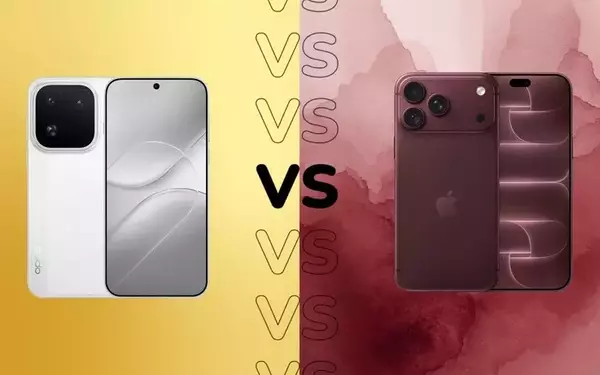
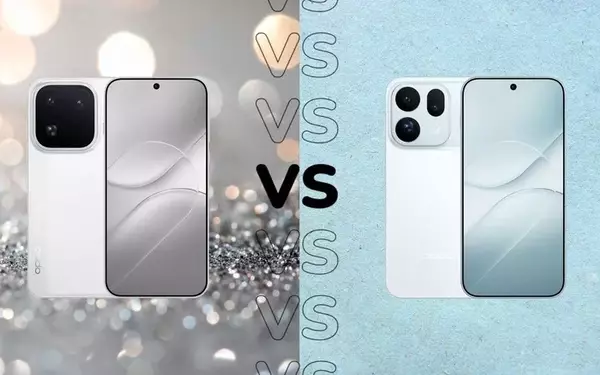
The design of the Oppo Find X10, while not radically different from its predecessor, showcases refined aesthetics and enhanced ergonomics. It maintains a sleek profile with flat aluminum edges and flat glass on both the front and back, complemented by familiar rounded corners. A key distinction is its more compact and hand-friendly form factor compared to the larger Pro Max. The camera array has been subtly redesigned, featuring a square camera bump seamlessly integrated into a larger rectangular island that elegantly rises from the rear glass panel. The previously circular LED ring light has been replaced by a larger, full LED flash positioned within this rectangular island. The phone's appearance is particularly striking in the new Glow Coral finish, which exudes an understated elegance without being overly minimalist. The virtually invisible bezels, measuring less than 1mm around the display, contribute significantly to an immersive visual experience. Furthermore, the Find X10 boasts an IP68 and IP69 dual rating for water and dust resistance, along with Gorilla Glass Victus 2 for improved scratch and impact protection, addressing a previous cost-saving measure. The Snap Key, while present, offers limited customization, a point of potential improvement for future iterations. Overall, the design masterfully balances slimness, comfort, and performance, optimizing internal and external space utilization.
Display Excellence: Immersive Visuals and Adaptive Technology on the Find X10
Oppo continues its tradition of equipping its flagship devices with top-tier displays, and the Find X10 is no exception. While its brightness, pixel density, and refresh rates appear similar to the Find X9 on paper, the inclusion of an LTPO panel marks a crucial upgrade. This technology enables the display's refresh rate to dynamically adjust in fine increments, optimizing power consumption. For instance, it can lower the refresh rate for static content or video playback that demands fewer frames per second, thereby conserving battery life. This adaptive capability ensures smooth transitions between refresh rates, eliminating the stutter often observed in older models. Moreover, the display can achieve an impressive 144Hz refresh rate in compatible games, offering an ultra-smooth gaming experience. With a resolution falling between 1080p and 1440p, the display offers crisp visuals. Users can opt for an automatic resolution setting or force maximum resolution for the sharpest possible image, though this may slightly impact battery life. Oppo's approach to color tuning leans towards natural and realistic tones, offering a refreshing departure from overly saturated Android displays. While this might result in slightly less "eye-popping" visuals in gaming, it provides a more accurate and true-to-life representation for video content and photographic monitoring within the camera application.
Camera Prowess: Versatility and Natural Imaging with the Find X10's Triple Lens System
The camera system of the Oppo Find X10 maintains Oppo's reputation for strong imaging capabilities, despite a somewhat perplexing telephoto lens configuration. It features a standard triple camera setup: a primary lens, an ultrawide lens, and a telephoto zoom lens with a 2.8x optical magnification. This 2.8x zoom is a curious choice, as the primary lens's high pixel density already offers a sharp 2x digital or crop-zoom, making the incremental 0.8x gain less impactful until higher zoom levels (around 6x or 10x) are utilized. Nevertheless, the new sensor and lens combination significantly improve upon the Find X9, with a larger sensor and bigger pixels delivering sharper images at higher zoom levels. However, it falls short as a close-up tele macro lens compared to the Find X10 Pro Max, often relying on digital cropping and artificial sharpening for macro shots. Despite these nuances, the Find X10 consistently produces clean, sharp, and low-noise images across all lenses during daytime and indoor conditions. The ultrawide camera, though the weakest, still delivers consistent results with minimal distortion and color matching across the other lenses. Oppo's camera app offers extensive customization, including Apple-inspired adjustment tools and two distinct shooting modes: a standard automatic mode with significant AI processing and a "Master Mode" that provides a more natural, traditional camera-like output with less artificial enhancement. This Master Mode is often preferred for its realistic textures and tones, especially as it limits digital zoom. For low-light photography, the dedicated night mode or automatic algorithm delivers balanced results, avoiding over-correction of colors or highlights, ensuring scenes appear sharp and in focus while retaining the essence of night. Videography is also well-supported, with up to 8K resolution in auto mode or 4K at 120fps, and a professional video mode offering Open Gate shooting for enhanced flexibility.
Performance Dynamics: Power and Limitations of the Oppo Find X10
The Oppo Find X10, powered by the Dimensity 9600M, offers robust performance for daily tasks and gaming, though it exhibits some limitations under sustained heavy loads. Benchmark tests show it generally achieves around 40 frames per second in graphically intensive games, a respectable figure not far from top-tier phones, with only dedicated gaming devices with lower-resolution displays significantly outperforming it. However, during stress tests involving prolonged, repetitive game scenes, the Find X10 struggled to maintain its peak frame rates, indicating thermal throttling. This is likely due to its relatively compact design, which, despite housing a large battery, leaves limited space for optimal cooling solutions. Despite this, the phone is more than capable for most applications, handling demanding games like Destiny: Rising for extended periods without noticeable stuttering or lag in its automatic settings. It can also achieve up to 144 frames per second in supported games, demonstrating its raw processing power when thermal constraints are not an issue. In essence, the Find X10 delivers ample power for typical usage scenarios, but professional gamers or those requiring sustained maximum performance might encounter occasional dips.
Software Experience: ColorOS 17, Customization, and Longevity Concerns
The Oppo Find X10 operates on ColorOS 17, built upon Android 17, featuring a user interface that clearly draws inspiration from recent iterations of Apple's iOS. This influence is evident in elements such as the liquid glass-like layers in settings, the menu for adjusting the Snap Key function, and the revamped color styles picker within the camera application. Despite these similarities, Oppo's software stands out for its extensive customization options. Users can personalize icon shapes and styles, Lock Screen depth, fonts, always-on displays, and fingerprint animations directly from the default launcher. A minor point of frustration, however, is the constrained scaling and positioning of many widgets, which are optimally displayed only with a 4-column app arrangement on the Home Screen, limiting flexibility for users preferring a 5x grid. A more significant concern lies in the software's longevity: the Find X10 is promised only four OS upgrades and five years of security patches. This falls short of the approximately seven years of support typically offered by other phones in this price segment, which could be a deterrent for users seeking extended software support.
Battery Life: Enduring Power and Rapid Recharging for the Find X10
One of the most impressive features of the Oppo Find X10 is its exceptional battery life, packed into a surprisingly sleek form factor. The global version, typically sold in Asian markets outside China, boasts a massive 8,000mAh battery. European markets, however, receive a version with a still commendable 7,150mAh cell. Regardless of the variant, battery anxiety is unlikely to be a concern for users. The enhanced efficiency of the LTPO display and sophisticated power management contribute to a significant improvement in battery longevity compared to its predecessor, the Find X9. For light users, the phone demonstrates excellent standby time, with minimal overnight battery drain. Even heavy users engaged in power-intensive tasks like GPS navigation are likely to comfortably last a full day. For many, the Find X10 reliably extends usage to two full days without requiring a recharge, a notable improvement over the Find X9's 1.5 to 2-day performance. When it does need a boost, the Find X10 exhibits remarkably fast charging capabilities. Testing reveals it can reach 50% charge in just 30 minutes, with a full 1% to 100% recharge taking approximately 70 minutes. This charging speed outpaces many Samsung and Google Pixel devices, even those with significantly smaller batteries, highlighting Oppo's optimization in this crucial area.
Should You Opt for the Oppo Find X10?
Considering the current market dynamics and price differences within Oppo's flagship series, the Find X10 presents a compelling value proposition over the more expensive Pro Max model. While it may not feature the absolute highest-tier processor or the most advanced ultrawide camera, it delivers all the essential attributes expected from a premium smartphone. Its substantial battery life, especially in the global variant, comfortably supports heavy usage, and its versatile camera system captures excellent images. The option to expand its zoom capabilities with a clip-on teleconverter further enhances its appeal. Crucially, unlike last year's models, choosing the more affordable Find X10 no longer means a compromise on display quality, as it shares the same efficient LTPO technology as its larger sibling. Although its screen is slightly smaller than the Pro Max, it maintains an equally high standard of quality. Many might consider this device to be the true "Find X10 Pro" in all but name. For users seeking a top-tier experience without the ultra-premium price tag of the Pro Max, the Oppo Find X10 is an excellent recommendation. However, if extended gaming sessions with sustained peak performance are a priority, dedicated gaming phones might offer a slight edge due to their specialized cooling solutions. For those contemplating a larger phone with superior cameras, the Find X9 Ultra might be a more suitable alternative, a discussion for another time. The Find X10 confidently holds its own against the best smartphones available, making it a smart choice for a broad spectrum of users.