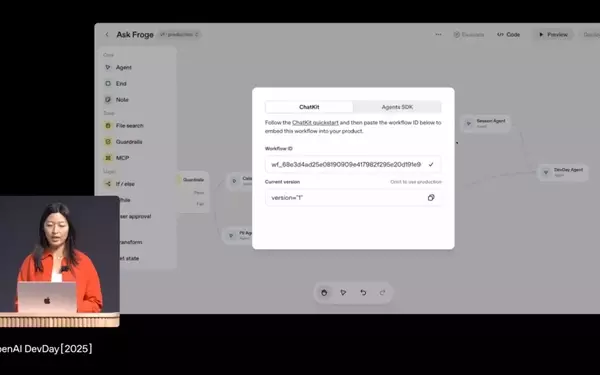
OpenAI is revolutionizing the utility of its flagship AI model, ChatGPT, by embedding third-party applications directly into its conversational framework. This strategic move, announced at DevDay 2025, allows users to access a range of interactive tools from leading brands like Booking.com and Spotify without leaving the ChatGPT environment. The initiative aims to foster a more dynamic and personalized user experience, while providing developers with an integrated platform for their innovations.
OpenAI's Vision: Transforming ChatGPT into an Application Hub
In a significant development for the artificial intelligence landscape, OpenAI has announced the integration of external applications directly within ChatGPT. This new functionality, rolled out on October 6, 2025, enables ChatGPT users to engage with a variety of services, including Booking.com, Expedia, Spotify, Figma, Coursera, Zillow, and Canva, all through a seamless conversational interface. OpenAI's CEO, Sam Altman, emphasized that this innovation is designed to make ChatGPT a more powerful tool for personal and professional advancement, promoting increased productivity, creativity, and accelerated learning. The company also released a preview of the Apps SDK, a comprehensive toolkit empowering developers to create and deploy these integrated applications.
This marks OpenAI's latest endeavor to cultivate a robust ecosystem around ChatGPT, building upon previous efforts such as the GPT Store. Unlike its predecessor, which operated as a distinct marketplace, the new system seamlessly weaves applications into ChatGPT's responses, allowing users to invoke third-party tools directly within their ongoing dialogues. This approach not only broadens the reach of developer-built applications but also enriches the user experience by providing immediate access to relevant functionalities. For instance, a user could command, \"Figma, transform this sketch into a functional diagram,\" or inquire, \"Coursera, educate me on machine learning?\", prompting the respective application to respond within the chat.
A demonstration highlighted the Zillow application, where users could employ natural language to locate apartments within specific price ranges. ChatGPT subsequently presented an interactive map with available options, facilitating further exploration through natural conversation. The system is also designed to intuitively suggest relevant applications based on user queries; for example, a request for a party playlist might automatically summon the Spotify app. Future plans include integrating services such as DoorDash, Instacart, Uber, and AllTrails.
The underlying technology for this integration is the Model Context Protocol (MCP), which enables developers to securely connect their data sources to OpenAI's AI infrastructure. These ChatGPT applications can execute actions and render fully interactive user interfaces within the chatbot's responses, even supporting video displays that can be dynamically adjusted based on user input. Existing subscribers to integrated services will have the convenience of logging into their accounts directly through ChatGPT. OpenAI has also indicated future plans to support monetization strategies for these in-chat applications, potentially leveraging its recently introduced Instant Checkout feature.
While this advancement promises enhanced functionality, critical questions surrounding user privacy and data access for third-party developers remain. OpenAI has stated that developers are required to collect only essential data and maintain transparency regarding permissions. However, the extent of data access—whether it encompasses an entire conversation, recent messages, or only the specific prompt that triggered an app—is still being clarified. Furthermore, how ChatGPT will prioritize services from competing companies, such as DoorDash versus Instacart, in its suggestions is an important consideration, with OpenAI asserting that user experience will be the paramount factor.
This strategic move by OpenAI underscores a broader trend towards AI becoming a central operating system for a multitude of digital services. The ability to seamlessly integrate and interact with diverse applications within a single AI conversational interface has profound implications for user engagement and developer innovation. It suggests a future where AI acts not just as a tool for information retrieval, but as a dynamic platform orchestrating various tasks and services, thereby streamlining digital interactions and fostering an ecosystem of intelligent, interconnected applications. The success of this initiative will largely depend on addressing privacy concerns and ensuring a fair and intuitive selection mechanism for competing services, ultimately shaping the evolution of AI-powered platforms.