OpenAI recently introduced substantial enhancements to its developer platform during its annual Dev Day, aiming to empower a broader range of AI applications. The updates feature the debut of more sophisticated models like GPT-5 Pro, an advanced language model, and Sora 2, a cutting-edge video generation tool. Additionally, the company launched gpt-realtime mini, a more accessible voice model, alongside new functionalities such as an agent-building tool and the capability to integrate applications directly within ChatGPT. These strategic moves are designed to foster innovation and broaden the utility of OpenAI's AI ecosystem for developers worldwide.
OpenAI's Latest Innovations Unveiled at Dev Day 2025
On October 6, 2025, at its annual Dev Day event, OpenAI announced a suite of significant upgrades to its API, reinforcing its commitment to the developer community. Among the most anticipated releases was GPT-5 Pro, the newest iteration of its large language model. This model is engineered to deliver enhanced accuracy and deeper reasoning capabilities, making it particularly valuable for complex applications in sectors such as finance, legal, and healthcare.
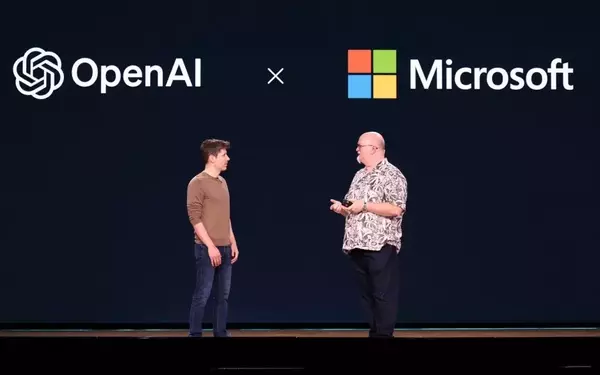
Sam Altman, OpenAI's CEO, highlighted the growing importance of voice interaction in AI, unveiling gpt-realtime mini. This new voice model is specifically designed for low-latency streaming interactions, offering comparable voice quality and expressiveness to previous advanced models but at a 70% lower cost. This development aims to make sophisticated voice AI more accessible and affordable for developers.
Another major highlight was the introduction of Sora 2, OpenAI's latest video generation model, available in preview within the API. Sora 2 builds upon its predecessor by generating more realistic and physically consistent scenes, now with synchronized sound and greater creative control. Developers can leverage Sora 2 to produce dynamic visual content, from cinematic wide shots to detailed concept visuals for product development, as demonstrated by examples like transforming a sketch into a toy concept for Mattel. This integration extends OpenAI's recent partnership with the toy manufacturer, bringing generative AI into the creative pipeline for toy design and content creation.
These updates collectively aim to attract more developers to OpenAI’s platform by providing powerful and versatile tools for creating next-generation AI applications.
The recent advancements from OpenAI demonstrate a clear strategic direction: democratizing access to powerful AI tools and fostering an ecosystem where developers can push the boundaries of what's possible. The introduction of more powerful and cost-efficient models, coupled with integrated development tools, suggests a future where AI is not just a specialized technology but a fundamental component of everyday applications across diverse industries. This forward-thinking approach has the potential to accelerate innovation and integrate AI more seamlessly into our digital lives, inspiring a new wave of creative and functional applications.