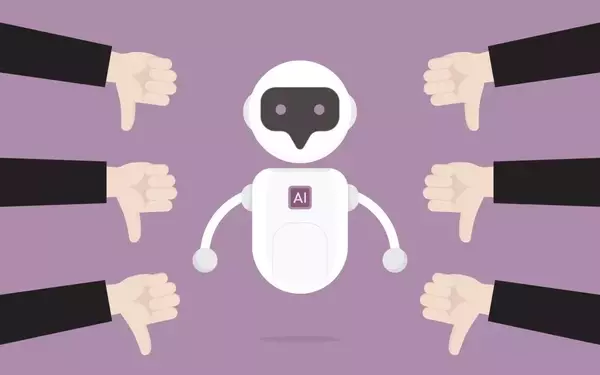
Jensen Huang, the visionary leader of Nvidia, has firmly asserted that artificial intelligence, fundamentally a creation of human engineering, requires no specific governmental oversight. Speaking at the recent Salesforce Dreamforce conference, Huang articulated his conviction that the onus of ensuring AI safety lies squarely with the developers and the dynamics of the free market.
Nvidia CEO Jensen Huang Advocates for Self-Regulation in AI at Dreamforce Conference
During his address at the Salesforce Dreamforce conference in September 2026, Nvidia's founder and CEO, Jensen Huang, passionately argued against the implementation of new governmental regulations for artificial intelligence. He countered the notion, sometimes put forth by AI safety researchers, that AI is a mysterious "alien mind." Instead, Huang characterized AI as a sophisticated interplay of hardware and software, entirely conceived and constructed by humans, implying that human ingenuity can inherently manage its safety. He posited that the development of AI is fundamentally an engineering challenge, not a legislative one, and thus can be effectively controlled through existing legal frameworks and corporate accountability.
Huang stressed that market pressures naturally compel companies to ensure the reliability and safety of their offerings. He stated that any company lacking confidence in the functionality or safety of its products should refrain from releasing them. This approach, he suggested, allows for rapid innovation while maintaining product integrity. He dismissed the idea that innovation speed and product safety are conflicting goals, advocating for both to be pursued concurrently. Huang’s perspective is particularly notable given Nvidia’s pivotal role in the AI industry, supplying the foundational hardware and developing advanced AI models. While his stance resonates with many who believe in industry-led innovation, it also raises questions regarding the potential for unforeseen risks and the adequacy of current legal mechanisms to address them, especially in light of past incidents involving technological failures and their societal impacts.
From a critical perspective, Huang's arguments, while championing innovation and market efficiency, could be perceived as self-serving given Nvidia's significant financial gains from the burgeoning AI sector. The history of technology is replete with instances where even well-intentioned companies released flawed products with profound consequences. The potential for AI to cause harm, whether through design flaws or misuse, underscores the complexity of this debate. While industry self-regulation is a plausible path, it requires a robust commitment from all stakeholders, including global AI developers, to prioritize safety. The influence of industry leaders like Huang, who seemingly enjoy direct access to political figures, highlights the need for a balanced approach that incorporates both technological advancement and comprehensive ethical and safety considerations.