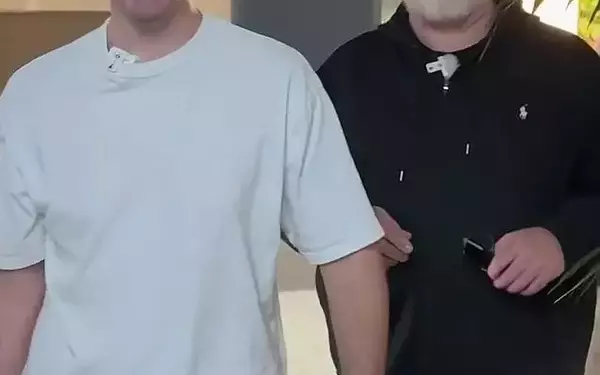
Following a recent viral video, television personality Noel Edmonds has released a comprehensive statement addressing the backlash he received for releasing live lobsters into the ocean. The 77-year-old, widely recognized for his role as host of 'Deal Or No Deal', and his wife, Liz, were captured on film purchasing lobsters from a local farm shop on the Isle of Man before depositing them into the waters of Peel Harbour. This act drew considerable criticism from the public, leading Edmonds to offer a detailed explanation of his actions and to dispel what he termed 'lies'.
Edmonds acknowledged the slim chances of survival for the released lobsters, conceding that he 'probably only delayed the inevitable' and that they might indeed be deceased. He recounted that the idea originated when Liz expressed sympathy for lobsters confined in a tank at a friend's farm shop. The shop owner, Matt Harrison, then offered the couple the lobsters as a gift, noting that others had felt similarly. Edmonds emphasized that they insisted on paying for the crustaceans, and Harrison provided instructions on how to release them, ensuring the water temperature matched their natural habitat near Peel.
Beyond the lobster incident, Edmonds used the opportunity to express his deep affection for the Isle of Man, where he maintains a holiday residence. He praised the island's strong sense of community and the warmth of its residents, remarking that it reminds him of 'how England used to be'. The shop owner, Matt, also reacted to the controversy by relocating the lobster tank within his store and is considering its complete removal, sensitive to public sentiment while balancing the desire to support local fishermen.
This incident highlights the growing public awareness of animal welfare and environmental impact. While Edmonds' intentions may have been compassionate, the debate surrounding the survival rates of released lobsters and their potential to disrupt marine ecosystems underscores the importance of informed action. It also serves as a reminder that good intentions must be coupled with scientific understanding to achieve truly positive outcomes for animal welfare and environmental conservation.