In a remarkable three-day trading period, leading cloud technology firms Alphabet, Microsoft, Amazon, and Oracle collectively saw their market valuations increase by a staggering $1.857 trillion. This significant upturn occurred despite earlier market apprehension stemming from Alphabet's earnings report, which signaled higher capital expenditures and potential pressures on free cash flow. Initially, concerns arose about the substantial investments these companies were making in AI infrastructure, with some viewing it as a drag on short-term financial performance. However, subsequent positive reports from Amazon and Microsoft helped to reframe this narrative, underscoring the long-term strategic benefits and profitability potential of these large-scale technology investments. This shift in investor sentiment reinforced the belief that current capital outlays are essential for securing future growth and market leadership in the rapidly expanding cloud and AI sectors.
Among these tech behemoths, Microsoft distinguishes itself as a particularly compelling investment opportunity. The company has demonstrated a superior ability to manage its aggressive AI infrastructure investments while maintaining robust profitability and healthy free cash flow. Unlike some of its counterparts, Microsoft's diversified business model, including its highly profitable productivity and business processes segment, provides a stable financial foundation. This allows the company to pursue strategic growth initiatives in cloud computing and artificial intelligence without significantly compromising its balance sheet or fundamental financial strength. Microsoft's strong operational performance, coupled with its disciplined capital allocation, positions it as a well-rounded and resilient player in the competitive cloud market, making it an attractive choice for investors seeking sustainable growth.
The Strategic Justification for Elevated Capital Spending in Cloud Computing
The recent surge in the market valuations of major cloud providers such as Alphabet, Microsoft, Amazon, and Oracle, which saw a collective gain of nearly $1.9 trillion in just three trading sessions, highlights a significant shift in investor perception regarding capital expenditures in the cloud sector. Initially, a bearish outlook emerged following Alphabet's July 22 earnings report, where higher capital expenditure (capex) guidance led to fears of margin compression and reduced free cash flow. This trepidation was evident as Alphabet's stock declined by 7.1%, reflecting investor anxiety over increased spending. Other cloud giants, including Amazon, Microsoft, and Oracle, also experienced underperformance early in the year, with Oracle seeing a substantial 38.4% decline. The market's initial reaction was to penalize companies for their aggressive investment strategies, interpreting large capex as a short-term financial burden rather than a long-term strategic advantage. This cautious stance underscored a concern that these massive investments, particularly in AI infrastructure, would take an extended period to yield returns, thus impacting immediate financial metrics like free cash flow.
However, subsequent earnings reports from Amazon and Microsoft quickly turned the tide, assuaging investor concerns and sparking a broad market rally. Amazon's report, despite showing an $8.82 billion negative quarterly free cash flow, provided crucial insights into the underlying profitability and growth potential of its cloud business model, Amazon Web Services (AWS). The company emphasized that initial upfront costs associated with building out data centers and AI infrastructure are strategic investments with long useful lives and significant future returns. Amazon's robust AWS growth, the fastest in 18 quarters, and its long-term contracts clearly demonstrated that demand for cloud services, especially AI-driven ones, is not slowing down. Similarly, Microsoft's strong performance and optimistic guidance further bolstered confidence. These reports collectively conveyed a powerful message: the temporary impact on free cash flow from increased capital spending is a necessary cost for unlocking paradigm-shifting, long-term gains in the cloud computing landscape. This re-evaluation of capital expenditures as a vital driver of future growth has profoundly reshaped investor sentiment, highlighting the strategic foresight of these tech leaders.
Microsoft's Balanced Approach to Growth and Profitability
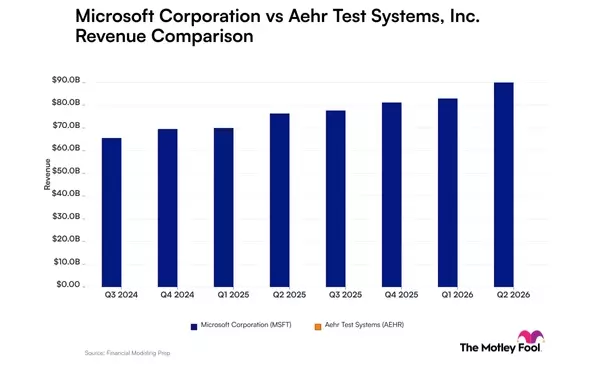
Even after a substantial market cap increase, Microsoft remains a top investment choice among cloud computing leaders, demonstrating a well-rounded financial profile. The company reported impressive growth, with overall revenue climbing 18% year-over-year and Microsoft Cloud revenue surging by 27%. Despite increased operational expenses, Microsoft maintained high gross margins at 67% and achieved a remarkable 45% operating margin. While free cash flow saw a 23% year-over-year decrease due to heightened capital expenditures, it still amounted to a robust $19.6 billion, comfortably covering $6.8 billion in dividends and $3.4 billion in stock buybacks. This ability to generate significant free cash flow, even amidst heavy investment, sets Microsoft apart from peers that are burning cash at a faster rate. Furthermore, Microsoft clarified that approximately two-thirds of its capital expenditure is directed towards short-lived assets, primarily CPUs and GPUs, essential for supporting Azure demand and upgrading existing infrastructure, indicating a strategic and efficient use of capital for immediate and future growth.
Microsoft's robust financial health is further underscored by its conservative valuation and clear growth trajectory. Trading at 24.9 times forward earnings estimates, its premium over the S&P 500's 21.2 is justified by its superior business quality and sustainable growth prospects. The company's future outlook is equally promising, with upbeat guidance for fiscal year 2027 projecting double-digit revenue and operating income growth, expected to outpace mid-to-high single-digit operating expense increases. Despite higher capital expenditures, Microsoft anticipates remaining free cash flow-positive and foresees only a marginal decline in operating margins, by less than one percentage point. This disciplined financial management allows Microsoft to aggressively invest in AI and cloud infrastructure without jeopardizing its financial stability or core profitability. Its ability to balance ambitious growth initiatives with sound financial principles makes it an exceptionally attractive and balanced investment, particularly for those looking to capitalize on the booming tech sector in the long term.