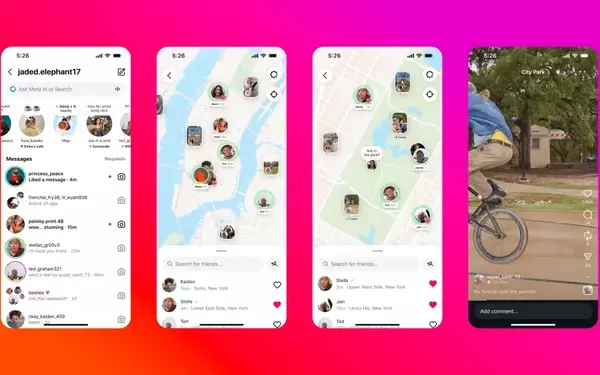
Instagram has unveiled its innovative Map feature, sparking considerable discussion among its user base. This new addition allows individuals in the U.S. to share their recent active locations and discover content tied to specific geographic points. Notably, Instagram's approach to location sharing differs from competitors like Snap Map; it only updates a user's location when the app is actively open or running in the background, rather than providing continuous real-time tracking. This design choice aims to address privacy concerns, with Instagram's head, Adam Mosseri, emphasizing its opt-in nature and clarifying misunderstandings. The platform automatically integrates location tags from recently published Stories or Reels, making geographical information more accessible than before. For users prioritizing their privacy, understanding and configuring location settings is now more crucial than ever.
Understanding and Managing Your Location on Instagram's New Map
The freshly launched Instagram Map is readily accessible through your direct messages (DMs). A simple tap on the new “Map” option, conveniently located at the top of your DM page, will open this immersive feature. Upon your initial engagement with the Map, a prompt will appear, assuring you that your location remains private until you explicitly choose to share it. This initial interaction is crucial for setting your comfort levels with the feature.
Managing your location-sharing preferences is a straightforward process designed to give you complete control. When you first delve into the Map, you'll encounter a clear option: “Who can see your location.” Here, you have the flexibility to define your audience. Choices range from sharing with your 'Friends' (those followers you reciprocate following), to a more curated 'Close Friends' list, or even selecting specific individuals. For those who prefer utmost privacy, an option to share with 'no one' is also available, ensuring your movements remain entirely private.
Should you wish to modify these settings at any point, the path is intuitive. Navigate to your profile, locate the settings icon in the upper-right corner, and proceed to the “Story, live and location” section. Within this menu, the “Location sharing” button provides the gateway to adjust your preferences, aligning them with your current privacy needs. Even if you opt to keep your own location private, the map's rich functionality persists. You can still view the locations of friends who choose to share theirs with you, fostering a sense of connection and discovery without compromising your personal space.
Beyond personal location sharing, the Instagram Map serves as a vibrant hub for discovering localized content. When you explore the map, you'll encounter not only the whereabouts of your friends but also location-based Stories and Reels from the creators you follow. Imagine a friend's story from a lively music festival appearing directly on the map, or a favorite creator's reel showcasing a new, must-try restaurant in your city. The map brings these experiences to life, offering a dynamic way to engage with content tied to real-world places. Furthermore, the map integrates Instagram's 'Notes' feature. These short, ephemeral messages, traditionally found at the top of your direct messaging feed, now gain a spatial dimension, appearing on the map when associated with a shared location. This enhances discovery and interaction, turning the map into a canvas for shared experiences.
This thoughtful integration of location-based content and customizable privacy settings makes the Instagram Map a powerful tool for social interaction and exploration. It underscores a growing trend in social media: the fusion of digital experiences with tangible geographic realities, allowing users to connect and discover in new and meaningful ways.
The introduction of Instagram's new Map feature clearly illustrates the evolving landscape of social media, where user experience and privacy often walk a tightrope. From a user's perspective, this update presents both exciting opportunities for discovery and a renewed emphasis on digital responsibility. The initial user confusion, quickly addressed by Instagram's head Adam Mosseri, highlights the critical need for clear communication and intuitive privacy controls in new product rollouts. It's a reminder that while innovation drives engagement, trust is built on transparency and user empowerment. As we increasingly integrate our physical and digital lives, platforms like Instagram bear a significant responsibility to design features that not only connect us but also safeguard our personal information. This Map feature, with its opt-in location sharing and the ability to control visibility, sets a positive precedent, encouraging users to be more mindful of their digital footprints. It compels us to consider, perhaps more deeply than before, the implications of sharing our whereabouts and to actively manage who has access to this personal data. Ultimately, the success of such features hinges not just on their utility, but on their ability to foster a sense of security and control among their vast global audience.