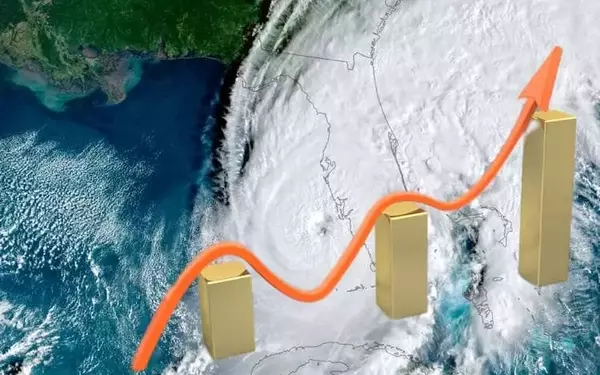
In recent years, the catastrophe bond market has seen a notable evolution, with a growing interest in instruments exposed to more frequent, yet less severe, natural disaster events. This shift, highlighted by Moody's Ratings, indicates a strategic reassessment by investors and reinsurers of how risk is priced and distributed within the financial landscape.
Despite recent significant catastrophe events, the overall pricing of catastrophe bonds has seen a moderation. This is largely due to a robust increase in available capital and sustained strong demand from investors. The market is adapting to new realities, moving away from the peak pricing observed in previous years while still maintaining attractive returns for various risk profiles. This dynamic environment suggests a maturing market capable of absorbing and diversifying risks more effectively.
Investor Preference Shifts Towards Higher-Frequency Exposures
Moody's Ratings has identified a discernible upward trend in the issuance of catastrophe bonds with higher expected losses (EL) over 2024 and 2025. This movement is primarily driven by a recalibration of pricing for high-severity, low-frequency risks, which has become more competitive. As a result, investors are increasingly directing their capital towards cat bonds that cover events with greater frequency, even if these events are individually less catastrophic. This strategic pivot reflects an evolving understanding of risk aggregation and a desire to capture opportunities presented by a more granular approach to risk assessment.
The market for catastrophe bonds has shown a slight uptick in the issuance of higher expected loss instruments in 2024 and 2025, a development that Moody's Ratings links to a decrease in the cost of insuring against high-severity risks. This adjustment has encouraged investors to increase their participation in bonds covering more frequent, albeit less intense, events. Historically, catastrophe bonds with higher expected losses typically address events that occur more often. Reinsurance providers have also played a role in this shift by increasing prices and attachment points for less frequent natural disasters like severe convective storms or wildfires, which have significantly contributed to annual catastrophe losses. This response follows a period where these 'non-peak perils' drove substantial losses, prompting traditional reinsurers to reduce aggregate reinsurance coverage for cedents after experiencing numerous high-frequency, lower-severity events. Consequently, reinsurance and cat bond pricing are now stabilizing, supported by enhanced market capacity and relatively low loss experiences. Although property catastrophe cover prices peaked in 2023-2024, they are now subtly declining. This is due to reinsurers directing more capital into property catastrophe business, drawn by appealing expected returns, and reallocating capacity from a challenging U.S. casualty reinsurance sector, leading to increased supply and slight pricing moderation.
Resilience and Moderation in the Catastrophe Bond Market
Despite a year marked by significant natural disasters, including major hurricanes and devastating wildfires, the catastrophe bond market has demonstrated remarkable resilience and a moderation in pricing during 2025. This stability is largely attributable to the abundance of capital available within the market and the consistent, strong demand from investors. The limited impact of recent catastrophic events on the principal of cat bonds, with most losses being absorbed by primary insurers and lower reinsurance layers, further underscores the market's robust structure. This suggests that the market is well-equipped to manage and diversify risk, even in the face of substantial challenges.
Even with considerable catastrophe activity over the past year, such as Hurricanes Helene and Milton in 2024 and the severe California wildfires in January, catastrophe bond pricing has softened in 2025. This moderation stems from ample market capacity and robust investor demand. Moody's indicates that the financial impact of these recent events on cat bond principals has been minimal, largely because primary insurers and lower reinsurance layers absorbed the bulk of the losses. Furthermore, while average coupons and spreads have decreased from their 2023-2024 peaks, they continue to offer attractive returns compared to historical averages and other fixed-income investments. This trend is corroborated by Artemis' data, which shows a decline in average spreads relative to expected losses for catastrophe bonds, paralleling broader reinsurance market movements. However, the most significant reductions in expected loss multiples are concentrated in higher-severity risks. In this segment, intense competition among traditional reinsurers and alternative capital investors has led to diminished returns, whereas returns for higher-frequency risks have remained more stable due to consistent sponsor demand for aggregate and frequency coverage, thereby supporting prices. Moody's also anticipates that the strong issuance trend for catastrophe bonds will extend into 2026, as noted in the same report.