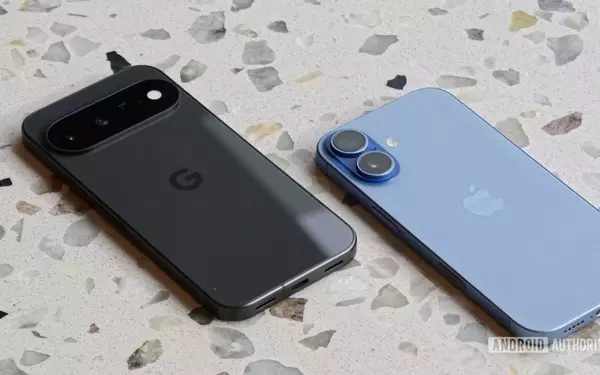
Google's latest Pixel 11 smartphones are encountering substantial challenges in delivering a smooth gaming experience, with many users reporting noticeable microstuttering and overall performance inconsistencies. This unexpected setback appears to stem directly from a pivotal change implemented by Google: the adoption of ANGLE as the default rendering layer for OpenGL ES, a decision that is paradoxically undermining the very performance it was intended to enhance, especially for graphics-intensive games and emulation.
Pixel 11 Gaming Woes: The ANGLE Default's Impact on Performance
Since its September 2026 update, the Pixel 11 series, including the Pixel 11 Pro XL, has been mandated to use ANGLE as its primary OpenGL ES implementation. This shift means that applications and games designed with OpenGL ES now have their graphics commands translated into Vulkan commands by ANGLE, a compatibility layer. While theoretically beneficial for modern GPU architectures, this translation process has introduced significant overhead, causing severe 'jank' and microstutters in titles such as Genshin Impact and various emulators.
Testing conducted on the Pixel 11 Pro XL, in contrast to the Pixel 10 Pro XL (which maintains OpenGL as its default render path), revealed that games heavily utilizing OpenGL ES APIs experienced a marked performance decline under ANGLE. For instance, Genshin Impact suffered from lower average frame rates and considerable stuttering, making gameplay less fluid than when ANGLE was disabled and the native OpenGL pipeline was used. Even games like COD Mobile and Asphalt Legends, which predominantly leverage Vulkan, exhibited varying impacts, with COD Mobile showing a slight performance dip and Asphalt Legends gaining a marginal boost, highlighting the inconsistent nature of ANGLE's current implementation.
Further investigation using the Dolphin Emulator underscored these issues. Games like Mario Kart Wii, which generally perform poorly with Vulkan, demonstrated significant microstutters under ANGLE, mirroring the problems observed with Genshin Impact. Although performance might stabilize after initial loading phases as assets are cached, the initial experience remains jarring. F:Zero GX, typically benefiting from Vulkan, also struggled with initial frame pacing under ANGLE, experiencing full-second freezes at the start of races, despite eventually achieving acceptable average frame rates.
The root cause appears to be ANGLE's propensity to trigger frequent cache rebuilding when new assets load, leading to missed frames and a fragmented gaming experience. This outcome contradicts ANGLE's stated goals of improving compatibility, smoothing rendering, and enhancing frame stability, particularly on devices with Vulkan-optimized drivers. For a flagship device priced at $1,299, the out-of-the-box gaming performance on the Pixel 11 Pro XL is currently deemed unacceptable. Users experiencing these issues are advised to disable ANGLE via the Developer Options to revert to native rendering, which has shown to mitigate severe frame-time spikes in many cases.
This situation serves as a stark reminder that even well-intentioned technological advancements can introduce unforeseen complications. Google's move to standardize Android's graphics stack around Vulkan via ANGLE, while forward-looking, has inadvertently created a performance bottleneck for its latest Pixel devices. It underscores the critical importance of extensive real-world testing across a diverse range of applications and gaming scenarios before pushing such fundamental changes as default settings. For gamers, this means a current compromise: sacrificing the latest default rendering tech for a smoother, more reliable experience by reverting to older, more stable settings. This incident prompts further questions about the thoroughness of quality assurance in flagship smartphone development and the delicate balance between innovation and user experience.