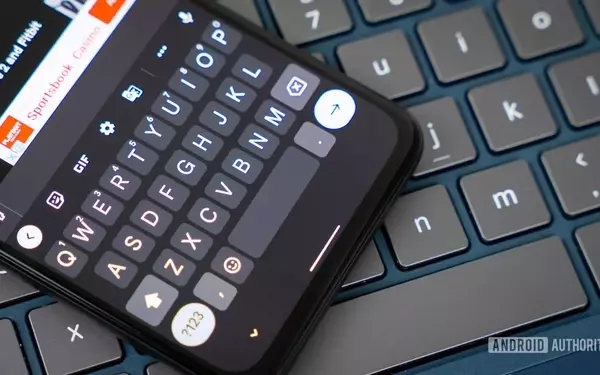
Google's Gboard keyboard is continuously evolving to simplify the transformation of thoughts into written words. Beyond traditional typing, swipe input, and voice dictation, a significant advancement is on the horizon. Gboard is preparing to integrate sign language recognition, representing a major leap in accessibility.
The ability to automatically translate sign language gestures into text has long been a futuristic concept. However, with breakthroughs in machine vision and artificial intelligence, this capability is now becoming a practical reality. Google DeepMind previously showcased its sophisticated SignGemma model for interpreting sign language, and this technology is now poised for a prominent application within Gboard. A recent beta version of the Gboard app (version 17.8.3.939743344-beta-arm64-v8a) provides an early glimpse into this new Sign-to-Text input option, signaling its imminent arrival.
This innovative feature employs a hybrid processing model to ensure user privacy. Actual video input of sign language will be processed directly on the device to extract raw gestures. Subsequently, only this gesture data will be transmitted to Google's cloud AI for analysis and conversion into text. While this two-step process might seem complex, it safeguards the user's video data, sharing only what's essential for interpretation. Although the tool's full functionality is not yet live, introductory prompts within the app outline its intended operation. However, questions remain regarding potential device limitations and the breadth of sign language variants, such as American Sign Language versus British Sign Language, that will be supported initially. Messages within the app also offer guidance for optimizing camera visibility, indicating a focus on user experience.
This pioneering input solution exemplifies the unique capabilities of smartphones in leveraging advanced technology for social good. By offering new communication pathways for those who need them most, Google is making a profound contribution to inclusivity. The ongoing development of this feature promises to empower a wider range of users, fostering more seamless interaction in the digital world. The potential for this technology to bridge communication gaps is immense, highlighting a positive trajectory for assistive technologies.