A trio of former scientists from Google X have developed an innovative AI-driven application named TwinMind, designed to act as a virtual 'second brain.' This app operates by discreetly recording ambient audio, with user consent, to establish a personalized knowledge graph. The startup has successfully secured $5.7 million in seed investment, recently launching its Android version, a new AI speech model, and an iOS counterpart.
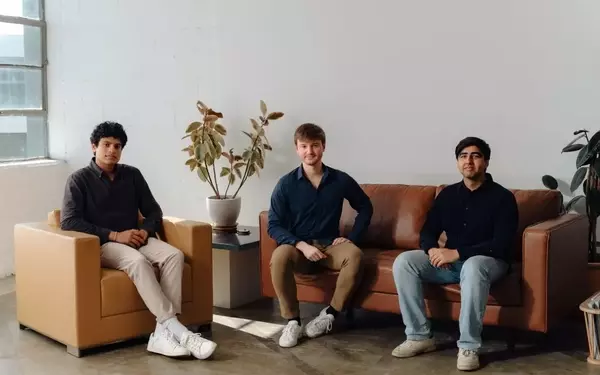
Co-founded in March 2024 by Daniel George, Sunny Tang, and Mahi Karim, all previously from Google X, TwinMind continuously captures background speech. This enables the application to transform spoken thoughts, meetings, lectures, and conversations into structured knowledge, facilitating the creation of AI-generated notes, tasks, and responses. A key feature is its ability to function offline, processing audio in real-time directly on the device, and recording continuously for up to 17 hours without significantly depleting battery life. Users also have the option to back up their data for recovery purposes, and the app supports real-time translation across more than 100 languages.
TwinMind distinguishes itself from existing AI meeting transcription services like Otter and Fireflies by its unique capability to passively record audio throughout the day. To achieve this, the development team engineered a low-level service in Swift that runs natively on Apple devices, bypassing the limitations faced by many competitors that rely on cloud-based processing and React Native. George emphasized the extensive effort invested in perfecting this continuous audio capture despite Apple's restrictive environment.
The concept for TwinMind originated in 2023 when George, then an Applied AI Lead at JPMorgan, found himself overwhelmed by consecutive meetings. He devised a personal script to record and transcribe audio on his iPad, feeding it into ChatGPT, which surprisingly began to assist with his projects and even generate code. Encouraged by this success and interest from peers, he decided to create a mobile application that could operate silently on a personal device, extracting valuable context from conversations.
Beyond the mobile application, TwinMind also offers a Chrome extension that gathers supplementary context from browser activity. This extension utilizes visual AI to scan open tabs and interpret content from various platforms, including email, Slack, and Notion. The startup even leveraged its own extension to efficiently vet over 850 intern applications, demonstrating its practical utility.
George highlighted that current AI chatbots, such as ChatGPT and Claude, struggle with processing large volumes of documents or extracting contextual information from platforms like LinkedIn or Gmail. Similarly, AI-powered browsers like those from Perplexity and The Browser Company lack the ability to integrate knowledge from offline discussions and in-person interactions. Currently, TwinMind boasts over 30,000 users, with a monthly active user base of approximately 15,000. While the United States remains its largest market, the app is gaining significant traction in countries like India, Brazil, the Philippines, Ethiopia, Kenya, and across Europe.
TwinMind caters to a broad audience, with professionals comprising 50-60% of its users, students accounting for around 25%, and the remainder utilizing it for personal pursuits. George shared an anecdote about his father using TwinMind to assist in writing his autobiography, underscoring the app's versatility. Addressing privacy concerns, George affirmed that TwinMind does not use user data for model training and is designed to operate without transmitting recordings to the cloud. Unlike many other AI note-taking applications, TwinMind deletes audio recordings immediately after transcription, storing only the transcribed text locally on the device.
The founders' extensive experience at Google X significantly accelerated TwinMind's development. George, who worked on six different projects at Google X, including the AI-powered earbuds 'iyO,' noted that this unique environment provided invaluable preparation for launching their own venture. Their prior experience allowed them to transition quickly from concept to a fully functional product.
Notably, Stephen Wolfram, with whom George had a previous connection through his PhD research in AI for astrophysics, made his first-ever startup investment by contributing to TwinMind's seed round. This round, led by Streamlined Ventures with participation from Sequoia Capital and other investors including Wolfram, valued TwinMind at $60 million post-money.
TwinMind has also launched its new AI model, TwinMind Ear-3, an advancement from its previous Ear-2. The Ear-3 model supports over 140 languages globally, boasts a low word error rate of 5.26%, and can accurately differentiate speakers within a conversation, with a speaker diarization error rate of 3.8%. This new model is a finely tuned combination of various open-source models, trained on a carefully curated dataset of human-annotated internet content, including podcasts, videos, and movies. George explained that supporting more languages improves the model's ability to understand diverse accents and regional dialects due to its broader training exposure.
The Ear-3 model is priced at $0.23 per hour and will soon be accessible via an API for developers and businesses. While Ear-3 relies on cloud processing due to its larger size, the TwinMind app seamlessly switches to the offline-capable Ear-2 model when internet connectivity is lost, reverting to Ear-3 once reconnected. With the introduction of Ear-3, TwinMind now offers a Pro subscription at $15 per month, providing a larger context window and dedicated email support. However, a free version with existing features, including unlimited transcription hours and on-device speech recognition, remains available. The startup, currently an 11-member team, plans to expand by hiring designers to enhance user experience, establish a business development team for API sales, and allocate resources towards user acquisition.