Google's Pixel phone series, despite its aesthetic and software evolution, now confronts a challenge of predictability. The initial distinctiveness has waned, leading to a sense of stagnation. To re-energize the Pixel brand and capture consumer interest, Google must implement significant strategic shifts.
Revitalizing the Pixel Experience: Key Strategic Imperatives
The Pixel lineup, while having undeniably matured in its aesthetic and operational stability over recent years, appears to be nearing a point of stagnation. Google's dedication to a consistent physical design, notably the recognizable camera bar, has successfully established the Pixel as a distinct presence among other mobile devices. The software, too, has evolved into a robust and reliable platform, often cited as a primary reason for choosing a Pixel. However, this stability has inadvertently led to a deceleration in meaningful innovation. Annual refreshes now feel perfunctory, with minimal tangible differences between successive generations. This incremental approach renders skipping multiple Pixel generations almost inconsequential, diminishing the excitement and making the devices feel increasingly uninspired. Indeed, some users might find greater value in exploring competing brands or alternative form factors, such as foldable phones. To recapture the market's enthusiasm, Google must fundamentally rethink its strategy.
A critical area for improvement lies in the integration of artificial intelligence. Currently, Google introduces a plethora of AI tools with each Android release and Pixel launch, ranging from advanced camera capabilities to self-managing phone features. Yet, these innovations often appear as disparate functionalities rather than components of a unified, coherent system. Each AI feature frequently carries its own branding and interface, which, while manageable when few, becomes confusing as their number and similar nomenclature grow. Despite Google's push to centralize AI under the 'Gemini Intelligence' brand, a comprehensive and intuitive hub for all AI tools remains elusive, representing a missed opportunity that the future Pixel 12, expected in 2027, must address.
Furthermore, the performance of the Pixel's proprietary Tensor processor continues to be a point of contention. Despite consistent anticipation for a significant leap in raw processing power, successive Tensor chips, including the recent Tensor G6, have delivered only incremental improvements. While the Pixel 11 series excels in local AI processing, its overall performance, particularly in graphics, lags behind flagships from competitors like Snapdragon and Apple. This disparity undermines the Pixel's appeal, especially when consumers are paying premium prices. Historically, Pixel devices offered a strong value proposition, either undercutting or matching rivals, a factor that largely contributed to the success of the A-series. However, this pricing advantage is diminishing, making it harder for Pixels to stand out in a crowded market without a clear performance edge.
Another vital aspect is the trickle-down of AI features. In the past, companies often restricted new Android updates to the latest devices, a practice now seen with exclusive features. For instance, the Pixel 11's 'Magic Capture' is not available on the Pixel 10, leaving previous generation owners feeling neglected. While such restrictions may boost sales of new models, they risk alienating loyal customers. Making the latest features available across older devices, as is done with Android updates, could foster greater brand loyalty by demonstrating a commitment to existing users beyond mere sales figures. This approach has proven effective in increasing customer satisfaction and should be extended to AI functionalities.
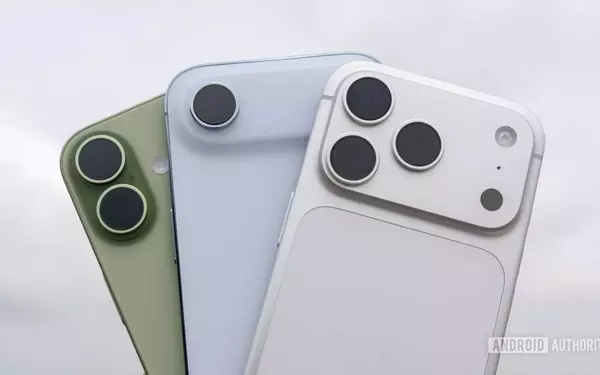
Finally, Google needs to move beyond incremental hardware updates. The Pixel 11 series, visually identical to its predecessors, exemplifies a lack of compelling physical innovation. While frequent design changes are not necessarily desirable, hardware additions should be genuinely useful rather than mere gimmicks, such as the criticized glowing LED light on the Pixel 11 Pro. Features that are forced upon users, rather than organically integrated into workflows, often fail, reminiscent of the short-lived Touch Bar on MacBooks. Instead, Google should prioritize enhancements like larger batteries and superior camera sensors to complement its advanced computational photography. Incorporating multifunctional buttons, akin to the OnePlus Alert Slider, or a dedicated physical shutter key, could significantly enhance usability and make Pixels more attractive to photography enthusiasts.
In conclusion, a multi-faceted approach addressing AI integration, processor performance, value proposition, feature accessibility, and meaningful hardware innovation is essential for Google to reignite consumer excitement and secure the Pixel's future in the competitive smartphone landscape.