Despite recent discussions around the challenging financial aspects of consumer artificial intelligence, particularly the shift of major players like OpenAI towards enterprise solutions, a significant opportunity remains for innovation and growth in this sector.
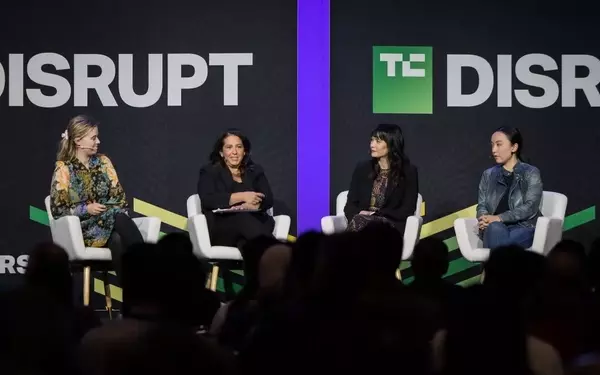
Olivia Moore, a leading partner at Andreessen Horowitz specializing in consumer AI, recently published a comprehensive analysis of the top 100 consumer AI applications. Her findings indicate that while dominant platforms like ChatGPT maintain a strong presence, emerging applications such as Suno and ElevenLabs are demonstrating remarkable resilience and market penetration. Intriguingly, her report also reveals several consumer categories, including social networking, dating, retail, travel, finance, and health, where AI’s potential remains largely unaddressed, signaling fertile ground for future development and market expansion.
Moore suggests that unlocking the full potential of consumer AI hinges on diversifying revenue streams beyond the conventional subscription and API fee models. She advocates for a return to monetization strategies that don't solely rely on direct consumer payments, suggesting that models incorporating advertising could offer wider accessibility and allow consumers to choose between free, ad-supported access and premium, ad-free subscriptions. This approach could significantly broaden the appeal and adoption of consumer AI products. Furthermore, addressing the high marginal costs associated with AI services is crucial. Moore believes that leveraging more economical, open-source, or lightweight models for specific consumer use cases, rather than relying solely on high-end frontier intelligence, will be key to making these services more financially viable and widespread. As the focus shifts from AI as a product to AI as an integrated component within broader consumer applications, the industry is expected to witness increased adoption of such cost-effective solutions.
The distinction between consumer and enterprise AI is becoming increasingly blurred, with many applications initially targeting individual users quickly finding significant traction within professional and business contexts. This phenomenon, termed "The Great Expansion," highlights how products designed for consumers are rapidly evolving into essential tools for prosumers and enterprises, particularly in areas like product development, marketing, and general work management. The absence of AI innovation in several traditional consumer categories represents a vast, untapped market that, if effectively addressed, could redefine the landscape of consumer technology, pushing the boundaries of what AI can offer to everyday users.