Navigating the AI Frontier: Tesla's Supercomputing Journey
The Genesis of an AI Vision: Early Concepts and Ambitions
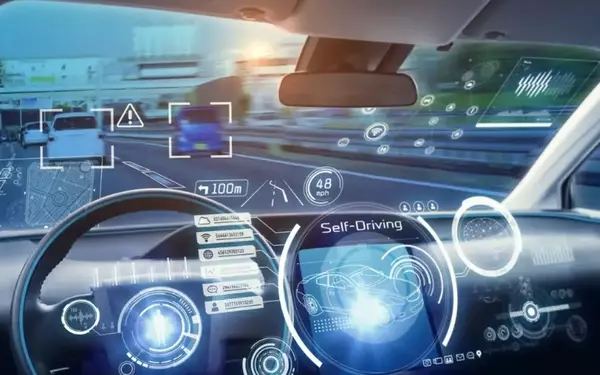
Elon Musk's long-standing ambition for Tesla extends beyond automotive manufacturing, envisioning the company as a leader in artificial intelligence, particularly in the realm of autonomous driving. This vision was deeply intertwined with the development of Dojo, a bespoke supercomputer designed to enhance the training of Tesla's Full Self-Driving neural networks. Despite current FSD systems requiring human oversight, the company believed advanced data processing and increased computational power were key to achieving fully autonomous vehicles.
Dojo's Unveiling and Initial Promises: 2019-2021
The concept of Dojo first emerged in 2019 during Tesla's Autonomy Day, where Musk hinted at a powerful AI training supercomputer. Over the subsequent years, he consistently reiterated Dojo's potential, emphasizing its role in processing vast amounts of video data from Tesla's expanding fleet. By 2021, Tesla officially introduced Dojo at its inaugural AI Day, detailing plans for its D1 chip and the integration of 3,000 such chips within the supercomputer to bolster AI training capabilities.
Progress and Pivots: The Mid-Development Phase (2022-2023)
In 2022, Tesla showcased progress on Dojo, including the installation of its first cabinet and a demonstration of its capabilities. The company set ambitious targets for an Exapod cluster by early 2023, with plans for multiple units. However, by 2023, Musk acknowledged Dojo as a "long-shot bet," while still seeing its potential for cost-effective training and as a marketable service. Despite claims of Dojo performing active training tasks, challenges and strategic shifts began to surface.
Scaling Efforts and Emerging Alternatives: 2024
The year 2024 saw Tesla reaffirming its commitment to scaling Dojo, including plans for a significant investment in Buffalo. Yet, the company simultaneously pursued a dual path, heavily relying on Nvidia GPUs due to high demand and their immediate availability. Concerns also arose about whether existing Tesla vehicle hardware could support future AI models, hinting at upcoming hardware upgrades. This period also marked the emergence of "Cortex," Tesla's new supercomputing cluster at Giga Texas, signaling a potential diversification in its AI infrastructure strategy.
The Decline of Dojo and the Rise of Cortex: 2025 and Beyond
By early 2025, the focus had clearly shifted. Tesla's earnings calls mentioned Cortex as a key enabler for FSD advancements, while Dojo received no attention. Although Musk initially spoke of Dojo 2, he soon hinted at redundancies and the desire for a unified chip design. Ultimately, in August 2025, reports confirmed the disbandment of the Dojo team and the project's shutdown. Musk later clarified that the company would consolidate all AI chip design efforts into the new AI6 chip, viewing Dojo as an "evolutionary dead end" in the pursuit of a singular, highly scalable solution for both inference and training in the future of AI and robotics.