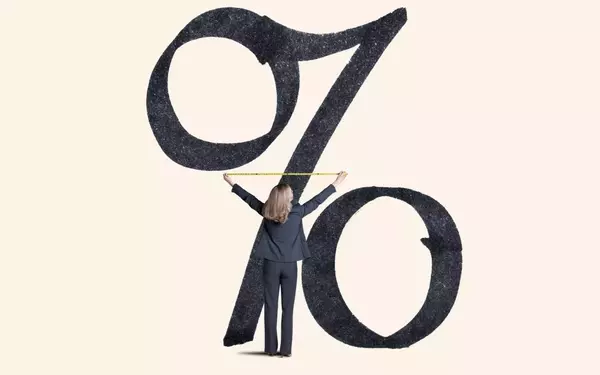
Over the past century, the S&P 500 and its preceding indices have showcased a remarkable average annual return of approximately 10%. This robust performance persisted despite enduring 15 recessions, including significant events like the Great Depression and the Great Recession. This historical trend strongly indicates that when the next economic downturn inevitably arrives, the most prudent course of action for investors is simply to remain calm and maintain their current holdings.
Historical Market Resilience: The Wisdom of Inaction
The S&P 500, a key barometer of the U.S. stock market, traces its origins back a hundred years to Standard & Poor's "Composite Index," initially comprising 90 companies. By 1957, this index expanded to include the top 500 companies, forming the modern S&P 500. Had an investor allocated $1,000 to this index at its inception in 1926, with dividends continually reinvested, that initial sum would have grown to an estimated $13 million today. This figure is equivalent to the purchasing power of roughly $688,900 in 1926, illustrating the profound long-term growth potential. Even through periods of extreme turbulence, including the Great Recession (2007-2009) where the S&P 500 plummeted by 57%, the COVID-19 Recession (2020) with a 34% drop, and the aggressive rate hikes of 2022-2023 leading to a 25% decline, the index ultimately recovered. For instance, an investment of $1,000 made at the market's nadir on March 9, 2009, with dividends reinvested, would now be valued at $16,000. Even investors who entered the market at its pre-crash peak on October 9, 2007, and simply held their positions, would see their $1,000 grow to nearly $5,800 today. Legendary investor Peter Lynch astutely observed that "Everybody in the world is a long-term investor until the market goes down." This highlights the common pitfall of panic selling during downturns, which often leads to significant losses. The historical data underscores that passively tracking the S&P 500 through an index fund, rather than attempting to time the market or selling in fear, has consistently proven to be a superior strategy for wealth preservation and growth.
The historical trajectory of the S&P 500 offers a vital lesson for contemporary investors: market fluctuations are inevitable, but long-term resilience is a defining characteristic of broad market indices. While the instinct to react to downturns can be powerful, the data overwhelmingly supports a strategy of patience and consistency. By resisting the urge to sell during periods of fear and instead maintaining diversified investments in index funds, investors are better positioned to benefit from the market's eventual recovery and sustained growth, ultimately achieving their financial objectives. This enduring principle of "doing nothing" in the face of market volatility remains a cornerstone of successful long-term investing.