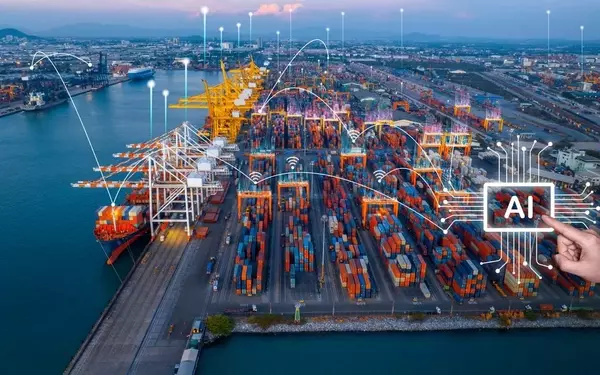
The manufacturing sector stands on the precipice of a transformative era, driven by the profound advancements in AI-powered robotic autonomy. This innovative approach, often referred to as 'physical AI,' is poised to redefine industrial automation, shifting from static, meticulously pre-programmed robots to highly adaptable, intelligent machines. These next-generation robots possess the capacity to interpret their surroundings, make informed decisions, and execute actions with human-like dexterity and responsiveness. This paradigm shift directly addresses the inherent challenges of traditional industrial robotics, which are characterized by their rigidity, extensive reprogramming requirements, and prohibitive operational costs. By embedding sophisticated AI software, manufacturing operations can embrace unprecedented levels of agility, real-time adaptability, and enhanced productivity.
The journey towards fully autonomous manufacturing processes is not merely an incremental upgrade but a fundamental rethinking of how machines and humans interact within the production ecosystem. Physical AI empowers robots to transcend their conventional roles as mere executors of repetitive tasks, allowing them to engage in complex, dynamic operations that were previously the exclusive domain of human operators. This leap forward promises not only to streamline existing workflows but also to unlock entirely new possibilities for innovation, efficiency, and growth across diverse industrial landscapes.
Enhancing Robotic Capabilities with Physical AI
The global manufacturing industry is currently experiencing a profound transformation, marked by the rapid integration of advanced robotic systems. There are now over 4.2 million industrial robots deployed worldwide, a testament to the sector's increasing reliance on automation. This expansion is further fueled by a global market value for industrial robot installations projected to reach $16.5 billion, indicating a sustained demand for more sophisticated and cost-effective robotic solutions. However, traditional industrial robots, while adept at repetitive tasks in controlled settings, are constrained by their rigid programming. Their inability to adapt to real-time changes or easily accommodate new parts or instructions leads to significant deployment costs and operational downtime, hindering dynamic production environments. The emergence of 'physical AI' is poised to overcome these limitations, enabling robots to mimic human cognitive and adaptive capabilities, thereby fostering greater flexibility and resilience in manufacturing processes. This development is likened to a 'ChatGPT moment' for industrial automation, signifying a breakthrough that will democratize workflow automation and unlock new levels of operational agility.
Physical AI represents a pivotal evolution in robotics, moving beyond the confines of predefined actions to empower machines with perception, cognition, and responsive behavior. This integration transforms industrial robots from simple tools into intelligent agents capable of learning and adapting to dynamic environments. Unlike their predecessors, which require extensive and costly reprogramming for every minor operational change, AI-enabled robots can adjust their tasks on the fly, significantly reducing downtime and enhancing production speed. This adaptive capacity is critical for modern manufacturing, where rapid changes in product designs, supply chains, and market demands necessitate flexible and responsive production lines. Furthermore, the shift towards edge computing in robotic systems minimizes latency and costs associated with cloud-based processing, enabling real-time decision-making directly at the point of operation. This innovative approach not only optimizes current manufacturing processes but also lays the groundwork for entirely new levels of automation and human-robot collaboration, making production more robust, efficient, and future-proof.
Transforming Manufacturing Operations and Beyond
The automotive manufacturing sector offers a compelling illustration of how AI-enabled, closed-loop automation software is revolutionizing complex processes. Traditionally, tasks such as kitting and sequencing multiple parts for various car models have been challenging to automate due to their intricate planning requirements, reliance on human intervention, and high programming costs. Kitting, the process of assembling disparate components into a unified package, and sequencing, the precise ordering of parts for the next production stage, demand meticulous execution and real-time adaptability. With the integration of AI-driven automation software, these previously labor-intensive and rigid processes can now dynamically adjust to variations and unexpected changes. A user-friendly robot training application allows line workers and technicians, even without coding expertise, to quickly configure new tasks, enabling autonomous execution with minimal disruption and human oversight. This significant advancement not only streamlines operations but also liberates human capital, allowing employees to focus on higher-value activities and strategic initiatives within the business.
The implications of physical AI extend far beyond specific manufacturing applications, ushering in a new era of collaborative human-machine ecosystems. This technology is fundamentally shifting the focus from merely building more advanced robots to imbuing them with the ability to perceive, interpret, and respond to environmental complexities. By enabling robots to detect real-world variations and dynamically adapt their actions, physical AI fosters a symbiotic relationship where machines can learn and evolve alongside human counterparts. This integration promises to unlock unprecedented efficiencies, drive innovation, and create new avenues for growth across various industries. The synergy between human ingenuity and intelligent robotic autonomy paves the way for smarter factories, more resilient supply chains, and enhanced overall productivity, ultimately shaping a future where humans and machines collaborate seamlessly to address the complex challenges and opportunities of the modern world.