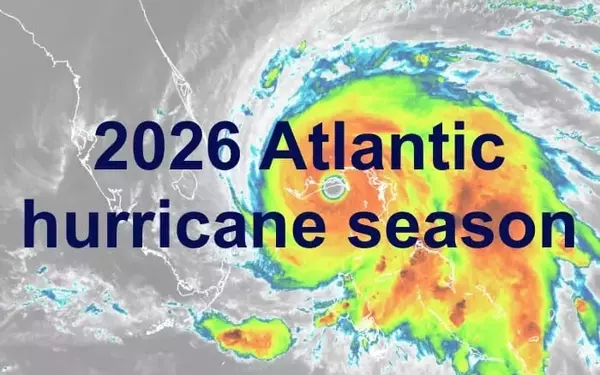
Revised Projections for a Muted Hurricane Season
CSU’s Latest Forecast Revision: Impact of El Niño on Atlantic Activity
The Colorado State University tropical meteorology team recently announced a further reduction in its seasonal forecast for the 2026 Atlantic hurricane season. This decision is largely driven by the high probability of a robust El Niño event, which is expected to significantly increase vertical wind shear across the Atlantic basin.
Divergence from Other Meteorological Predictions: TSR’s Contrasting View
In contrast to CSU’s revised forecast, Tropical Storm Risk (TSR) had earlier in the day increased its own seasonal predictions, adding one hurricane and one major hurricane to its numbers. TSR suggested that the subtropical Atlantic might experience more favorable conditions for tropical cyclone development, presenting a divergent perspective on the upcoming season.
The Dominant Influence of El Niño: Suppressing Storm Formation
The CSU team maintains its focus on the potential for a particularly strong El Niño this year. Such conditions are known to typically suppress the formation and intensity of named storms and hurricanes in the Atlantic, primarily by fostering increased wind shear that disrupts cyclone development.
Quantitative Revisions: Lowered Storm and Hurricane Counts
Following its previous update, which projected 11 named storms, 5 hurricanes, and 2 major hurricanes, CSU’s latest July 8th forecast shows even lower numbers. The revised outlook now calls for only 9 named storms, 4 hurricanes, and just 1 major hurricane, alongside a significantly reduced Accumulated Cyclone Energy (ACE) Index value of 50.
Detailed Explanation: El Niño, Sea Surface Temperatures, and Wind Shear
The CSU team clarified that moderate El Niño conditions are likely to intensify, potentially reaching a strong phase during the peak of hurricane season. Despite near-average sea surface temperatures in the Caribbean and tropical Atlantic, the powerful El Niño is expected to be the primary factor, leading to high levels of vertical wind shear that inhibit hurricane activity.
Reduced Landfall Probabilities and Persistent Preparedness Advice
Consequently, the forecast includes a well-below-average probability for major hurricane landfalls along the continental United States coastline and in the Caribbean. However, residents in coastal areas are still urged to undertake thorough preparations each season, as even a single hurricane making landfall can have significant impacts, regardless of the overall forecast activity.
Updated Landfall Probability Figures: A Decline Across All Regions
The updated July 8th forecast reveals a further reduction in landfall probabilities. For instance, the chance of a hurricane hitting the entire US coastline has dropped to 17%, the U.S. East Coast including Peninsula Florida to 8%, and the Gulf Coast from the Florida Panhandle to 10%. The Caribbean also sees a reduced probability of 19% for a major hurricane.
Analyzing Mixed Signals: Warmer Eastern Subtropical Atlantic
Phil Klotzbach, leader of the CSU team, pointed out a slightly warmer than normal eastern subtropical Atlantic, contrasting with near-average sea surface temperatures in the Main Development Region. He noted that these mixed signals present a complex picture for forecasting the hurricane season's overall activity.
Implications for the Insurance and Reinsurance Markets
The revised forecast lowers the average across all seasonal hurricane predictions seen so far, now projecting fewer named storms and major hurricanes than historical averages. This trend has implications for the insurance, reinsurance, catastrophe bond, and insurance-linked securities (ILS) markets. Stakeholders are reminded that a single significant storm can still cause substantial economic and insured losses, necessitating vigilance as the season unfolds.