King Ridge Capital Advisors has undertaken a comprehensive evaluation of investment strategies, particularly scrutinizing the enduring relevance of the traditional 60/40 portfolio. Their recent findings underscore the inherent limitations of conventional diversification methods in times of economic turbulence. The firm advocates for a transformative approach to asset allocation, emphasizing the unique advantages of catastrophe bonds (CAT bonds) as a source of truly uncorrelated returns. This innovative perspective highlights the necessity of incorporating insurance-linked securities into modern investment frameworks to build more robust and resilient portfolios that can withstand unpredictable market fluctuations. The report suggests a paradigm shift from simple asset class diversification to a more nuanced risk-type diversification, paving the way for enhanced stability in an increasingly interconnected global economy.
King Ridge Redefines Portfolio Resilience with Catastrophe Bonds
On August 5, 2025, King Ridge Capital Advisors released a pivotal report examining the challenges faced by the widely adopted 60/40 investment portfolio, which allocates 60% to equities and 40% to government bonds. For decades, this strategy was lauded for its consistent risk-adjusted returns and dependable diversification. However, the firm’s analysis, particularly in the wake of the 2022 market correction, exposed a significant vulnerability: the concurrent decline of both equities and U.S. Treasuries when inflation soared and interest rates rose sharply. This unexpected dual drawdown severely impacted balanced portfolios, prompting a re-evaluation of traditional investment principles.
Many asset allocators have attempted to mitigate interest rate risks and bolster yields by venturing into alternative fixed-income strategies, including high-yield bonds, private credit, real estate debt, and infrastructure finance. Yet, King Ridge cautions that while these alternatives may offer attractive returns in stable environments, their diversification benefits are often overstated. Historical events like the global financial crisis (2007-2009) and the early 2020 COVID-19 market collapse revealed that these asset classes, too, are susceptible to systemic credit risks, exhibiting equity-like behavior during downturns.
The report further elaborates on the structural risks posed by increased government spending and persistent budget deficits, which contribute to a growing national debt burden. These fiscal imbalances, coupled with shifts in investor sentiment, could exert upward pressure on sovereign yields and increase rate volatility, challenging the traditional defensive role of government bonds.
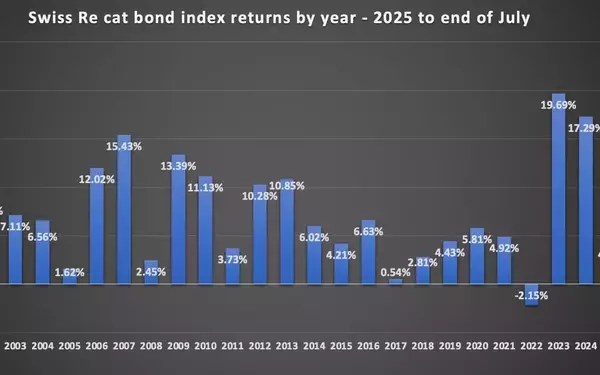
In response to these evolving market dynamics, King Ridge proposes a strategic pivot towards risk-type diversification rather than merely diversifying by sector or geography. This is precisely where catastrophe bonds emerge as a compelling solution. CAT bonds offer a return stream fundamentally derived from insurance risk, a factor largely independent of economic growth or central bank policies. Citing the Swiss Re’s Global Cat Bond Index, the report highlights the remarkable stability and solid returns of CAT bonds, with only two negative return years since its inception in 2002, even amidst significant financial market stress.
King Ridge concludes that modern portfolios must account for the breakdown of traditional hedges, the diminishing value of credit-heavy alternatives, and inherent fiscal risks that may impact sovereign debt returns. In today's complex financial landscape, the true catastrophe may not be natural disasters but rather the synchronized collapse of portfolios built on outdated diversification assumptions. Catastrophe bonds, therefore, offer an unparalleled advantage: genuine independence from the broader economic cycle, making them an indispensable component for future-proof investment strategies.
From a journalist's perspective, King Ridge Capital Advisors' report marks a significant shift in how we perceive portfolio construction and risk management. The traditional 60/40 model, once considered an unshakeable pillar of investment wisdom, is now openly challenged, forcing investors to confront its vulnerabilities head-on. The rising prominence of catastrophe bonds as a truly uncorrelated asset class is not just a niche financial trend; it represents a fundamental re-thinking of what constitutes a resilient portfolio. This insight urges us to look beyond conventional asset classes and embrace innovative instruments that offer genuine diversification. It’s a call to action for investors to adapt their strategies to a world where market correlations are increasingly unpredictable, emphasizing that true stability lies in understanding and mitigating diverse forms of risk, not just familiar ones.