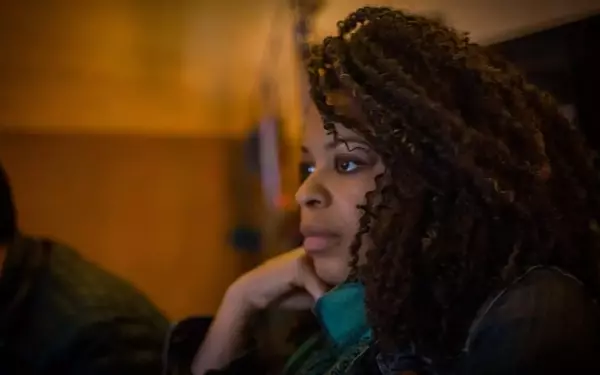
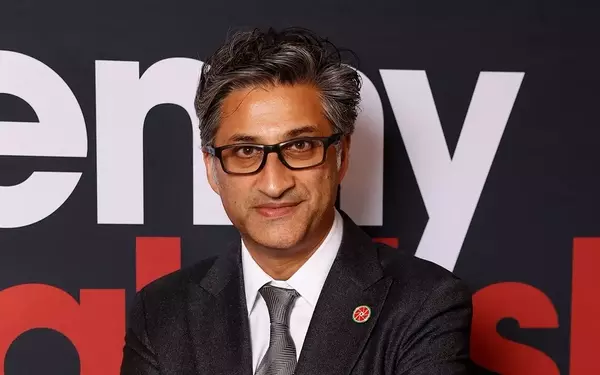
At the recent Middleburg Film Festival, a panel of acclaimed artisans offered a rare glimpse into the meticulous craftsmanship that shaped Christopher Nolan's cinematic adaptation of Homer's epic, 'The Odyssey.' Production designer Ruth De Jong, costume designer Ellen Mirojnick, and editor Jennifer Lame, each recipients of the festival's Creative Collaborators Award, detailed the extraordinary efforts involved in realizing Nolan's grand vision with an unwavering commitment to practical effects and intricate detail.
The Making of an Epic: Nolan's 'Odyssey' Revealed
The genesis of Nolan's 'The Odyssey' was marked by the director's characteristic penchant for secrecy, a detail production designer Ruth De Jong highlighted during her discussion. Having previously collaborated with Nolan on 'Oppenheimer,' De Jong was tasked with reading the script in person, with no digital copies or discussions permitted on electronic devices. This highly confidential process underscored Nolan's hands-on approach and his desire for a deeply immersive, practical filmmaking experience.
De Jong described the immense creative freedom granted to her, akin to having the "world as her oyster," yet acknowledged the daunting challenge of executing such a colossal project practically. Her work spanned six diverse countries—Morocco, Greece, Italy, Iceland, Scotland, and the United States—to construct authentic sets for key locations like the fall of Troy, Circe's mystical dwelling, and Odysseus's ship. This global undertaking required an unparalleled level of logistical planning and artistic ingenuity.
Costume designer Ellen Mirojnick faced an equally monumental task, creating over 5,300 costumes to dress the myriad characters in the film. She began with the armor, a foundational element for distinguishing the opposing armies of Trojans and Spartans. Mirojnick emphasized the importance of using period-appropriate materials, such as linen, which allowed for realistic aging and distressing, capturing the harsh wear of sand, salt, wind, and rain on the fabrics.
Editor Jennifer Lame, renowned for navigating Nolan's complex non-linear narratives in films like 'Tenet' and 'Oppenheimer,' handled 2.1 million feet of 70mm Imax film for 'The Odyssey.' She particularly noted the intricate challenges posed by the Polyphemus scene. This sequence, where Odysseus encounters the Cyclops, demanded careful assembly of extensive footage, including the use of Bill Irwin as the physical Cyclops and innovative temporary visual effects for his eye. Lame revealed that while the final scene was concise, the initial material was far more expansive, requiring difficult editorial choices between puppet and actor performances.
The construction of Troy itself was another monumental feat. After an initial search in modern Turkey proved unsuitable, De Jong discovered Aït Benhaddou in Morocco. This ancient fortified village provided vast acreage where a colossal 2.5-acre set, covering over 110,000 square feet, could be built from the ground up. This practical approach allowed for the seamless integration of newly constructed elements with the existing historical structures, creating an unparalleled sense of authenticity.
De Jong and Nolan were particularly keen on realizing the Trojan Horse and the Cyclops as practical builds. The Trojan Horse, standing approximately 35 feet tall, was conceptualized as being constructed from ship parts, reflecting the master craftsmanship of the era. Prototypes and molds were developed to facilitate the creation of multiple horses. In a remarkable display of practical filmmaking, the scene depicting the horse being dragged to the temple was achieved by 300 actors physically pulling ropes, without any mechanical assistance, showcasing the team's dedication to historical accuracy and immersive storytelling.
The seamless integration of practical effects, meticulous set design, and detailed costuming, all guided by Nolan's visionary direction and Lame's expert editing, collectively brought the ancient epic to life. The artisans' presentations highlighted not just the technical prowess but also the deep collaborative spirit that defines a Christopher Nolan production.
The insights from the Middleburg Film Festival panel provide a profound appreciation for the dedication and artistry involved in creating large-scale cinematic works. Nolan's insistence on practical filmmaking, even in an age dominated by digital effects, stands as a testament to the power of tangible craft. This approach not only challenges the creative teams to innovate but also results in a uniquely immersive and impactful experience for the audience. The meticulous attention to detail, from constructing ancient cities across continents to designing thousands of historically accurate costumes and painstakingly editing vast amounts of film, reminds us that true cinematic magic often lies in the hands of unsung artisans who translate a director's grand vision into a breathtaking reality.