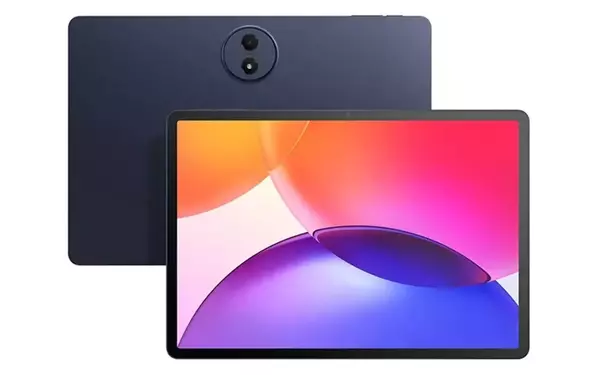
Apple has unveiled a thoroughly revamped iPad Mini, marking a significant evolution for its smallest tablet. This comprehensive transformation integrates an advanced OLED screen, a new System-on-Chip (SoC), and a more streamlined physical design. The announcement positions the new iPad Mini not merely as a device for casual media consumption but as a powerful, pocket-friendly alternative akin to the iPad Air, potentially reshaping market expectations for compact portable devices.
The updated iPad Mini now boasts an expanded 8.5-inch OLED display, a notable upgrade from its predecessor's 8.3-inch LCD panel. This new screen technology delivers superior contrast and authentic blacks, alongside more than double the peak brightness, enhancing visual clarity and vibrancy. For professionals requiring precise display capabilities, Apple has also made its nano-texture display glass, designed to minimize reflections, available for the first time on the iPad Mini, though the refresh rate remains at 60Hz. These display enhancements significantly elevate the user experience for both creative tasks and everyday viewing.
Beyond the display, the new iPad Mini features a remarkably slimmer 5.4mm profile, a reduction from the previous model's 6.3mm. This thinner design is complemented by an IP67 rating for dust and water resistance, addressing a long-standing demand for increased durability in a device often subjected to daily wear and tear. A novel Acoustic Display system, integrating custom woofers directly into the screen and tweeters within a sealed chamber, further enhances the audio experience, setting a new standard for sound quality in a mainstream tablet.
Underpinning these physical and display improvements is the powerful 2nm A20 Pro chipset, the same processor found in Apple's flagship iPhones. This generational leap in silicon delivers substantial performance gains, particularly for graphically intensive gaming and on-device AI tasks, collectively known as Apple Intelligence. The device also incorporates Apple’s bespoke N1 wireless chip, supporting Wi-Fi 7, Bluetooth 6, and Thread, alongside a second-generation C2 cellular modem for 5G connectivity. Storage options influence processor configurations; 128GB and 256GB models feature a 5-core CPU, 7-core GPU, and a 16-core Neural Engine, while the 512GB variant boasts an upgraded 6-core CPU, 7-core GPU, and a dual 16-core Neural Engine.
Additional refinements include a landscape-oriented FaceTime camera, aligning the iPad Mini with Apple's contemporary tablet lineup, and continued support for the Apple Pencil Pro and the more affordable Apple Pencil (USB-C), maintaining its utility for creative endeavors. The new iPad Mini is available for pre-order from October 28, with general availability beginning November 6, in Midnight and Starlight color options.
These significant advancements come with a notable price adjustment. The base 128GB Wi-Fi model of the new iPad Mini starts at $699, a $200 increase from its predecessor's $499 starting price. While this premium pricing might deter some, the enhanced features, including the OLED display, powerful A20 Pro chip, and IP67 durability, solidify Apple's position at the forefront of the compact tablet market. This strategic update effectively neutralizes many of the competitive advantages once held by Android tablets, particularly in the premium compact segment. Given the current market dynamics and the general lack of robust competition from Android manufacturers in this niche, Apple is well-positioned to maintain its strong hold, even with the higher price point. This latest iteration of the iPad Mini challenges Android brands to innovate or risk conceding the high-end compact tablet market entirely.