In the evolving landscape of artificial intelligence, Apple stands at a pivotal juncture, poised to redefine the user experience through its revamped Siri and robust ecosystem. While OpenAI's innovative app platform within ChatGPT has introduced a new paradigm for app interaction, Apple's strategic integration of AI into its core offerings, coupled with its immense user base and control over hardware and software, positions it uniquely to lead the next generation of AI-powered applications. This vision aims to move beyond conventional app interfaces, fostering a more intuitive and voice-driven interaction that could revolutionize how users engage with their devices.
The Evolving Battle for AI-Powered App Dominance: Apple vs. OpenAI
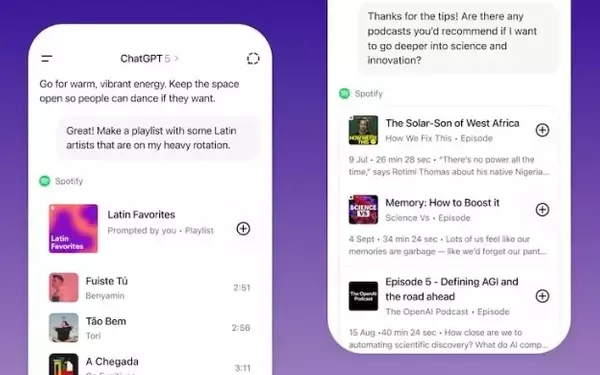
In October 2025, OpenAI introduced a significant shift in how users interact with applications by allowing them to operate directly within ChatGPT. This development, which enables tasks such as travel bookings, playlist creation, and design edits without necessitating switches between various applications, was met with immediate acclaim by some as the harbinger of a future dominated by ChatGPT, potentially rendering Apple's traditional App Store model obsolete. Notably, Anish Acharya, a prominent observer, likened this to Steve Jobs's groundbreaking announcement of the App Store in March 2008, underscoring its potential to become the primary distribution channel for AI-native services, leveraging ChatGPT's 800 million active users.
However, Apple is far from out of the race. The Cupertino giant, controlling both its hardware and operating system, boasts a staggering 1.5 billion iPhone users globally. This vast, integrated ecosystem presents a formidable advantage. Apple's proposed enhancements to Siri, unveiled at its developer conference in June 2024, signal a strategic move to transform user interaction from mere taps on app icons to more natural, conversational commands. The company's vision, dubbed 'Apple Intelligence,' seeks to seamlessly integrate AI capabilities directly into the operating system, allowing users to control applications through an intelligent Siri without needing to open individual apps.
The current model of interacting with apps via a grid of icons on a smartphone home screen is increasingly seen as archaic. Modern users often turn to AI assistants for recommendations or information, bypassing traditional search engines or standalone applications like Yelp. This shift is evident in the common practice of voice-commanding smart speakers or AirPods to play music, or consulting chatbots for business details and movie reviews. The core appeal of AI lies in its ability to quickly synthesize information and provide direct answers, often more efficiently than navigating multiple app interfaces.
Conversely, OpenAI's app platform, while innovative, confines interactions to the ChatGPT environment. Users must explicitly name the app within their prompts to initiate its functions, a process that can be cumbersome and prone to errors, as Bloomberg's early tests indicated issues with loading screens and failed queries. This model requires a learning curve and a specific interaction style that might not appeal to all users.
Apple's long-standing Siri, despite its checkered past and reputation for delays, could emerge as the superior solution. Its deep integration within the iPhone's existing framework means users already possess their preferred applications and are familiar with the App Store. The ingrained habit of using these apps, coupled with Apple's plan to make Siri contextually aware of on-screen content and user intentions, promises a more fluid and intuitive experience. Apple's SiriKit, a framework introduced with iOS 10, already allows developers to integrate app functionalities with Siri and Shortcuts, paving the way for immediate enhancements as the new AI features roll out. This includes categories like Notes, Media, Messaging, Payments, and Workouts, where Siri will be able to perform actions directly within apps, or even suggest actions based on context.
Moreover, Apple's App Intents framework, updated with iOS 16, expands Siri's capabilities to a broader range of applications, including photo editing, document management, and communication tools. This framework allows apps to integrate with various platform features, such as Spotlight and the Action button, providing a unified and intelligent user experience. Unlike ChatGPT, which relies on a newer Model Context Protocol (MCP) requiring developer adoption and currently supports only a limited number of applications, Apple's system benefits from a mature developer ecosystem and widespread existing integrations.
While OpenAI, in collaboration with Apple's former design head Jony Ive, is exploring its own hardware device to further integrate AI into daily life, it faces challenges with public aversion to always-on AI devices due to privacy concerns. Apple, on the other hand, already possesses the hardware, the operating system, and a strong emphasis on user privacy, offering controls to limit data collection—a feature notably absent in current ChatGPT app interactions. With reports indicating Apple's AI system is nearing readiness, with internal testing demonstrating Siri's ability to control major apps like Uber, Amazon, and WhatsApp, and a confirmed rollout slated for the next year, Apple is well-positioned to leverage its comprehensive ecosystem and deep user trust to redefine the AI-powered app era, potentially rendering OpenAI's intermediary app model unnecessary.
This ongoing competition underscores a critical juncture in the technological world. Apple, with its integrated ecosystem and user-centric approach to AI, has a unique opportunity to reclaim its position at the forefront of innovation. By refining Siri and seamlessly integrating AI into its vast array of applications and services, Apple can not only enhance user experience but also solidify its dominance in the burgeoning AI-driven market. The success of this endeavor will hinge on Apple's ability to deliver on its promise of an intuitive, privacy-conscious, and deeply integrated AI experience that empowers users to interact with their devices in profoundly new ways.